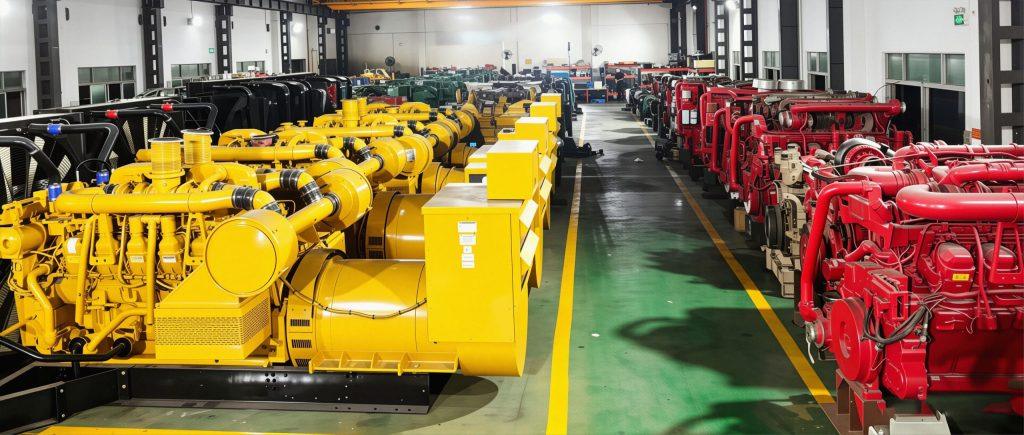
A dealer asking for a used generator stock list usually wants speed. The supplier wants the same thing, but speed depends on the first message. A request that only says “send your Cummins generators” often leads to a broad reply, repeated questions and a stock file that still does not match the dealer’s market.
For used industrial generators, a better request gives enough commercial and technical context for the supplier to sort the list before sending it. The goal is not to write a long specification. The goal is to remove the obvious mismatches before price discussion begins.
Start with the resale market, not only the model
Two dealers may both ask for Cummins generator sets and still need different stock. One may resell 500kW to 1000kW standby units for commercial buildings. Another may supply mine-site or oilfield buyers looking for high-power open sets, engines, or replacement units. The model name alone does not tell the supplier which stock file is useful.
A dealer request should include the destination country or region, buyer type, expected power range, preferred brands, frequency, voltage and typical quantity. If the market regularly asks for 50Hz or 60Hz, say that early. If both can be discussed, ask the supplier to separate them in the file.
Give a buying range instead of a single ideal unit
Used generator supply is not the same as ordering a new standard set. The best available unit this week may not match every line of a buyer’s ideal request. Dealers usually get better results when they provide a workable range: brand preference, acceptable kW band, open or silent type, frequency, voltage and condition level.
For example, a request such as “Cummins or Caterpillar, 500kW to 1500kW, 50Hz, open type acceptable, 2 to 4 units per quarter” is easier to match than a request for one exact model with no alternative range. The supplier can then send current units that have a realistic chance of moving in that dealer’s market.
Ask for proof files with the stock list
A stock list is more useful when it is tied to evidence. Dealers should ask for clear photos, nameplate photos, controller or alternator details where available, condition notes and export readiness. For higher-value units, inspection files, loading photos or previous export proof can help the dealer answer downstream buyer questions faster.
This is especially important when the dealer plans to quote before physically seeing the equipment. Photos do not replace inspection, but they reduce wasted conversation. They also help separate real stock from old catalog material that has been circulated too many times.
Include the quote path: FOB, CIF or destination port
If the dealer wants a CIF price, the supplier needs the destination port before the quote is meaningful. A stock list without shipping context can show available units, but it cannot answer the landed-cost question that many buyers ask first.
For repeat dealer cooperation, it is useful to tell the supplier whether the first response should include ex-works/FOB reference only, or whether the dealer expects CIF options for common ports. That keeps the first file clean and avoids mixing product selection with unfinished logistics questions.
What HXH Power needs for a faster dealer reply
For dealer stock requests, HXH Power can prepare relevant used generator options after receiving the country or region, sales channel, preferred models or brands, kW range, frequency, expected quantity and destination-port requirement. If the dealer has recurring demand, monthly or quarterly volume helps HXH prioritize the right stock file instead of sending a one-time general catalog.
Dealers can start from the dealer inquiry page or review available categories on the products page. Project buyers can compare application fit through solutions and export examples through projects. For a specific quotation, send the model range, kW band, frequency, voltage, quantity and destination port through the contact page.