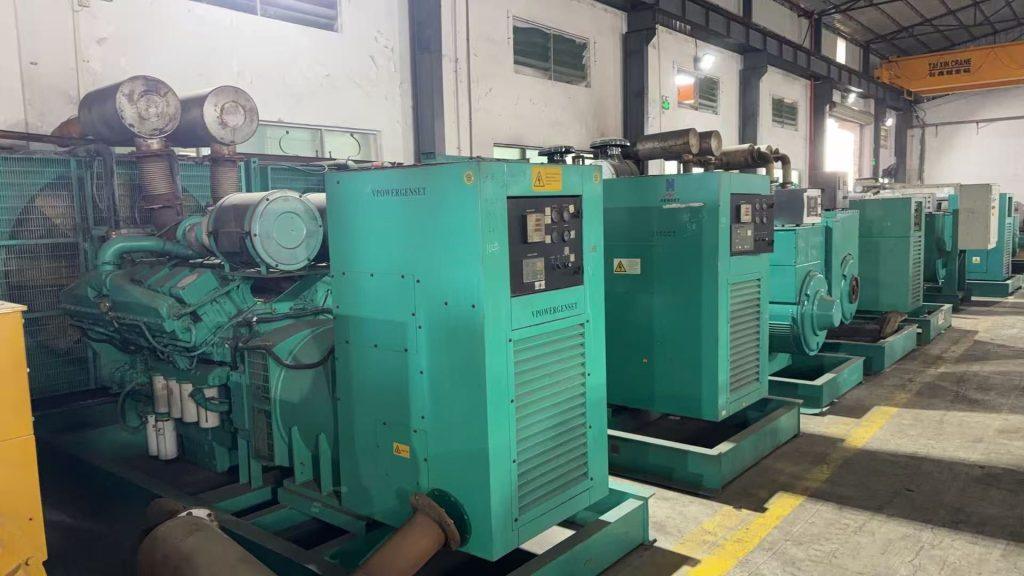
A request for a 500kW used diesel generator and a request for a 1000kW unit can sound like the same purchasing job at different sizes. In practice, the two RFQs often need different stock choices, alternator checks, cooling checks and export documents.
Before asking HXH Power for a current stock list or CIF price, the buyer should confirm whether the number is the running load, the largest motor-starting demand, or simply the old generator nameplate. That detail changes the quotation faster than the brand name does.
Start with the load, not the label size
A 500kW unit is normally considered when the site has a smaller industrial load, a commercial backup job, a telecom or facility package, or a project where one genset covers a defined section of equipment. A 1000kW unit is a different purchase: the buyer is usually looking at larger standby duty, mining support, factory backup, large pumps, or a project where voltage dip and motor starting must be checked carefully.
| Buyer question | 500kW range | 1000kW range |
|---|---|---|
| Best first check | Normal running load and spare margin | Starting load, voltage dip and duty rating |
| Typical RFQ detail | Application, voltage, frequency, hours per day | Load list, largest motor, standby or prime use, site altitude and ambient temperature |
| Common buying risk | Overbuying a larger unit that runs too lightly | Understating motor-starting demand or confusing standby and prime rating |
| Useful supplier file | Photos, nameplate, running video, basic inspection notes | Nameplate, control panel details, alternator information, radiator/cooling check, test notes and export packing plan |
Why 1000kW is not just two 500kW units
Some buyers compare only the total kW. That is too rough for used equipment. A single 1000kW set may be easier to manage for one large load, while two smaller sets can give redundancy if the site design supports parallel operation. The correct answer depends on the load profile, control system, switchgear, maintenance team and how the buyer plans to run the site during service downtime.
For a fast quote, HXH Power needs the basic operating picture: 50Hz or 60Hz, target voltage, standby or prime use, expected daily running hours, destination port, and any large motor or pump that starts under generator power. Without that information, a supplier can send a stock photo, but it cannot send a responsible match.
Check the rating type before comparing models
New generator data sheets usually separate standby, prime and continuous-duty ratings. Used equipment buyers should keep the same discipline. A unit that looks like 1000kW on one nameplate may not be the same purchase if one seller is quoting standby and another is quoting prime power.
As public reference points, Cummins lists its KTA38 Series across 50Hz and 60Hz models, with prime ratings shown in the 720-928kW range and standby ratings shown in the 800-1020kW range. Cummins also lists the KTA50 at 50Hz, with prime ratings shown in the 1000-1440kW range and standby ratings shown in the 1120-1600kW range. These figures are for current public product references, not a promise about any used unit in stock. A used generator still needs its own nameplate, condition and configuration checked.
What to send before asking for a CIF quote
A buyer does not need a full engineering package to start. A short, practical RFQ is enough for the first stock screen:
- Required power range, and whether it is running load or existing generator size.
- Frequency and voltage: 50Hz or 60Hz, low-voltage or medium-voltage requirement.
- Duty: standby, prime, emergency backup, temporary project power or resale stock.
- Application: mining, factory, telecom, commercial building, hospital, data center support or remote site.
- Largest motor or pump load, if any.
- Destination port and target delivery timing.
- Preferred brand or model range, if the project has a maintenance standard.
For dealers, the same information helps HXH Power send a relevant stock file instead of a broad catalog. The stock list can then be checked by model, kW range, frequency, condition and export readiness. The process is similar to the dealer RFQ path described in what dealers should send when requesting a used generator stock list.
Where HXH Power can help
HXH Power handles used and refurbished diesel generator sets, engines and related replacement units. For buyers comparing 500kW and 1000kW ranges, the practical work is to narrow the request before pricing: model range, frequency, duty rating, condition files, inspection photos and export plan.
Start with the current product and solution portfolio, then send the load information through the contact page. For larger project supply, HXH can also review the application through its solutions path before confirming stock options.