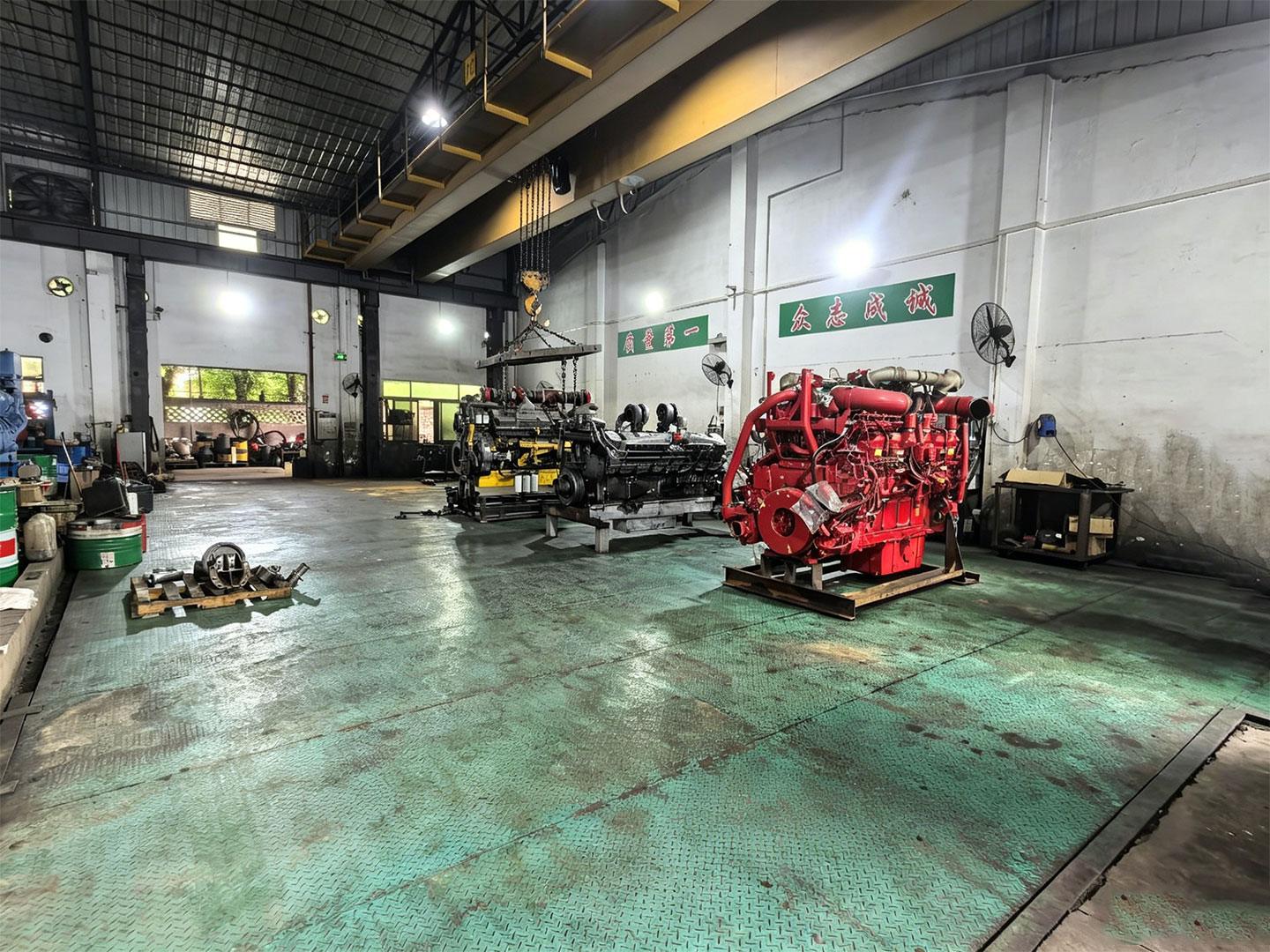
A used generator described as “regularly serviced” may still arrive with no record that can be tied to the machine in the quotation. Before an RFQ becomes a deposit, the buyer should ask for unit-specific maintenance evidence: documents, photographs and current test results that share the same serial-number trail.
Used generator maintenance records are not a substitute for inspection. They help a buyer understand what work was reportedly completed, when it was completed and whether the claim belongs to the exact engine, alternator and control package being offered. The strongest file combines historical records with a current condition and operating test.
Begin with identity, not the service claim
Every useful record starts with the machine identity. Request readable photographs of the generator-set plate, engine plate, alternator plate and controller model. Record the serial numbers and compare them with the quotation, invoice draft, inspection sheet and service documents.
A workshop invoice that says only “Cummins generator repair” is weak evidence when several similar units are in stock. A buyer needs a clear link between the record and the quoted unit. That link may be an engine serial number, generator serial number, internal stock number or a photograph attached to the job sheet. If the supplier uses its own stock number, ask how it maps to the original plates.
The same identity check applies after parts are replaced. An alternator, controller or engine assembly may have a different serial number from the generator-set plate. The file should state what changed rather than leaving the buyer to assume the package is still in its original configuration.
Separate owner history from supplier workshop work
Two types of records are often mixed together. Owner or site records describe maintenance completed before the generator entered the used-equipment market. Supplier workshop records describe inspection, cleaning, repair or replacement completed after acquisition.
Both can be useful, but they answer different questions. An owner log may show dated oil, filter, coolant or battery work. A supplier job sheet may show that a radiator was cleaned, a hose replaced or a controller fault investigated. Neither should be presented as a complete lifetime history unless the documentation actually covers that period.
When earlier records are unavailable, the supplier should say “previous service history not available” and document the work completed in its own workshop. A clear limitation is more credible than an unsupported claim of full maintenance.
Ask for the minimum service-record fields
A practical service entry should identify the unit and show enough context to be checked. For each available job, request:
- service or repair date;
- engine or generator serial number, or the traceable stock reference;
- displayed operating hours, with a note if the meter was replaced or cannot be verified;
- work completed and the reason for the work;
- parts and consumables used, including part numbers where available;
- technician, workshop or service-company identification;
- measurements or test results recorded after the work;
- photographs of the unit before, during and after major repairs.
A list of filters or parts without a date and unit reference proves little. Likewise, a dated invoice without a serial number may show that work was purchased, but not that it belongs to the generator in the current offer.
Treat operating hours as one data point
Displayed hours can help with context, but they should not be treated as a guaranteed lifetime total. Controllers and hour meters can be replaced, reset, disconnected or moved between packages. Older mechanical records may also be incomplete.
Ask for a continuous video that begins at the identity plate, moves to the controller or meter, and records a cold start when available. Compare the displayed hours with dated service entries and any controller event history. If the sources do not agree, record the discrepancy in the quotation and base the buying decision on current inspection evidence rather than an assumed hour total.
The HXH guide to alternator and control-panel inspection explains what controller, AVR and electrical evidence to request separately from engine history.
Review major repair and replacement evidence
“Overhauled” and “refurbished” are scope descriptions only when the work is defined. Ask which components were inspected, measured, repaired or replaced. For major engine work, useful supporting material may include a work order, parts list, measurement sheet and dated photographs. For cooling, fuel, starting or electrical work, request the specific fault and the action taken.
Do not infer that a new coat of paint confirms internal work. Exterior preparation can improve presentation and corrosion protection, but it does not establish bearing, cylinder, fuel-system, winding or controller condition. The broader refurbished diesel generator condition checklist separates visible preparation from mechanical and electrical evidence.
If non-original or aftermarket parts were used, the record should identify them. The buyer can then check compatibility, future availability and the included warranty terms. A generic statement such as “all necessary parts changed” is not a parts record.
Use oil or coolant reports carefully
Laboratory reports can support a condition review when the sample identity, date, operating context and laboratory method are clear. A report from an unidentified machine, or a sample taken immediately after fluid replacement, should not be treated as proof of the quoted engine’s long-term condition.
If analysis is offered, ask who collected the sample, where it was collected, how many operating hours were on the fluid and which serial number appears on the submission. Interpretation should be left to a qualified technician who can consider the engine model, lubricant, service interval and trend history. One result without prior samples is not the same as a trend.
Match history with a current test file
Historical records do not show today’s condition. Before shipment, agree on a current inspection and test scope for the exact unit. Depending on the project and available test facilities, the evidence may include:
- cold-start and warm-up video;
- visible leak, hose, belt, wiring and battery inspection;
- oil pressure, coolant temperature and charging readings where instruments are fitted;
- no-load voltage and frequency;
- agreed staged-load readings with test duration and equipment identified;
- controller alarms and shutdown-function checks;
- a written list of unresolved defects and work included before shipment.
Not every supplier can provide a full-rated load-bank test. The record should state the actual load, duration, instrument and ambient conditions instead of using “load tested” as an undefined sales phrase. Buyers working remotely can use the pre-shipment generator inspection checklist to agree the evidence sequence.
Classify each claim by evidence strength
| Supplier statement | Evidence to request | Buyer interpretation |
|---|---|---|
| Regularly serviced | Dated log or invoices tied to the unit serial number | Useful only for the periods documented |
| Low hours | Meter video, controller history and dated records | Displayed hours; lifetime total may remain unverified |
| Overhauled | Defined work scope, parts list, measurements and photographs | Assess the documented work, not the label |
| New parts installed | Part numbers, supplier invoice and installation record | Check compatibility and warranty scope |
| Load tested | Unit identity, load level, duration, readings and test date | Valid only for the stated test conditions |
| No faults | Current inspection report, alarm check and disclosed exceptions | Condition statement at the inspection date, not a future guarantee |
Put unresolved gaps into the quotation
Missing history does not automatically make a used generator unsuitable. It changes the evidence required and the risk allocation. If prior service records are absent, the quotation should say so. The buyer can then require a wider current inspection, price specific repairs separately, or make the deposit conditional on an agreed test file.
Record discrepancies in writing: unreadable plates, uncertain hours, replaced controllers, undocumented repairs, unavailable load capacity or parts still pending. Define what the supplier will complete before balance payment and which files will be delivered before shipment. This prevents a general workshop discussion from being mistaken for a contractual condition statement.
What to include in the RFQ
Send the required kW or kVA, voltage, frequency, phase, duty, application, destination port and preferred inspection method. Add a direct request for the available unit-specific maintenance file, current defects, repair scope and test capacity.
Review current HXH generator listings, then send the product link or stock reference through the HXH enquiry page. HXH can reply with the evidence available for that unit; documents and test scope will vary by machine.
Frequently asked questions
Are maintenance records enough to approve a used generator?
No. Records support the history claim, but buyers should also verify current identity, visible condition, operating readings and the agreed load-test scope.
What if the previous owner did not provide service records?
The supplier should disclose that limitation and provide its own dated inspection, repair and test file. The buyer can then decide whether additional inspection is needed before a deposit.
Can displayed operating hours be guaranteed?
Displayed hours can be recorded, but their lifetime accuracy may be uncertain if the controller, meter or wiring history is incomplete. Cross-check them against dated service and event records.
What does a proper overhaul record contain?
At minimum, it should identify the unit, date, work scope, parts used and responsible workshop. Major work should also include relevant measurements, test results and photographs where available.
Reference resources: Cummins QuickServe Online service information; STAMFORD | AvK owner manuals.