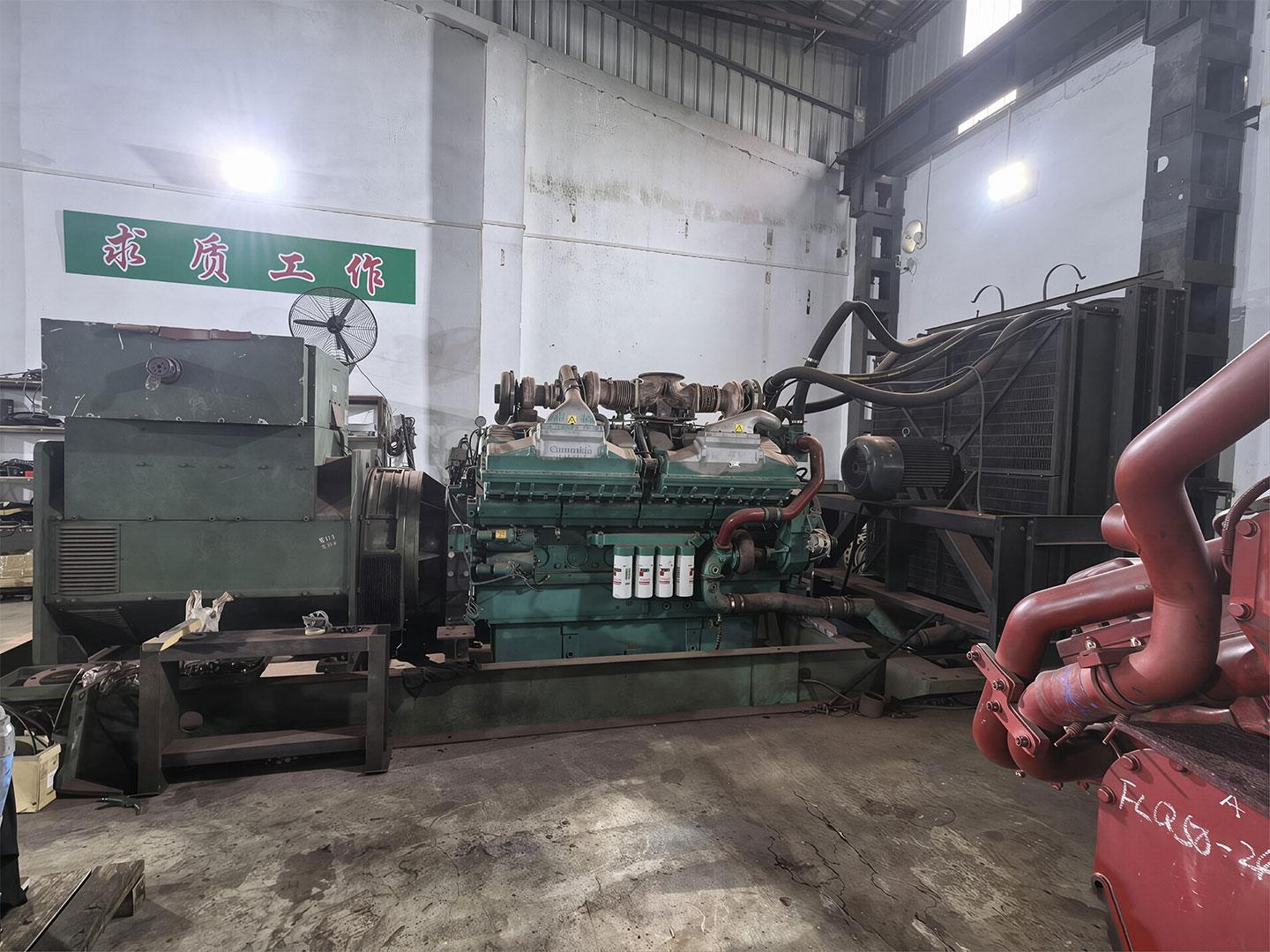
For a remote-site buyer, the expensive mistake is not always the purchase price. It is receiving a used diesel generator that matches the quotation on paper but fails the practical checks that should have happened before loading.
Mining sites, telecom stations, construction camps and island facilities usually do not have time to repair a unit after arrival. Before a generator leaves China, the buyer should ask for enough inspection evidence to confirm the unit, not just a clean invoice.
Start with the identity of the unit
The first inspection point is simple: prove the generator is the same unit being quoted. Ask for clear photos of the engine nameplate, alternator nameplate, control panel, radiator, circuit breaker and overall set. The model, serial number, voltage, frequency and rated output should match the offer.
This matters more with used Cummins, Caterpillar, MTU and other high-power sets because two units can look similar from a distance while carrying different alternators, controllers, hours or rebuild histories.
Confirm rating, frequency and voltage before price negotiation goes too far
A buyer should not wait until the shipping stage to confirm whether the unit is 50Hz or 60Hz, low-voltage or medium-voltage, standby-rated or prime-rated. These points affect whether the generator can be used at the destination site and whether extra work is needed before export.
If the site has pumps, crushers, compressors, HVAC loads or telecom rectifiers, send the supplier the major load list before inspection. Generator application guidance from manufacturers treats load acceptance, service access and load-bank access as practical design issues, not paperwork details. For a used unit, those same issues should be checked before shipment.
Ask what was actually tested
Buyers often ask for a “test video,” but a short start-up clip is not enough. A useful pre-shipment check should explain what was tested and what the readings showed.
- Cold start and warm start behavior
- Voltage and frequency stability after the unit reaches operating speed
- Oil pressure, coolant temperature and charging voltage
- Visible leaks around fuel, oil and coolant lines
- Radiator, fan, belt and hose condition
- Alternator output, breaker condition and control panel response
- Alarm and shutdown function where practical
Where a load bank or site load test is available, ask for the test condition, duration and recorded parameters. If a full load test is not possible before export, the supplier should state that clearly rather than dress up a no-load start video as a full performance test.
Inspection files should help the buyer make a decision
A good inspection package is not a folder of random photos. It should help the buyer answer three questions: is this the right generator, is the condition acceptable, and what still needs to be prepared before the unit ships?
For most export orders, the useful file set includes:
- Current photos of the exact unit, not catalog images
- Nameplate and controller photos
- Short running video with sound
- Key readings during test run
- Known repair or refurbishment notes
- Accessories included with the set
- Packing, loading or transport photos before delivery
Commissioning documentation in the power industry normally records test results, operating data, findings and corrective actions. A used-generator export inspection does not need to look like a large EPC handover package, but it should follow the same principle: the buyer needs records that can be reviewed, not only promises.
What the buyer should send before inspection
The inspection is faster when the buyer gives the supplier enough information at the start. For HXH Power, the basic RFQ file should include:
- Required kW or kVA range
- 50Hz or 60Hz requirement
- Voltage and phase
- Standby, prime or continuous-use expectation
- Destination port and country
- Application: mining, telecom, commercial backup, data center support or temporary power
- Preferred brands or models, if any
- Whether photos, video, test data or loading proof are required before deposit or shipment
Without these details, a supplier may send a broad stock list that looks busy but does not help the buyer close the job.
How HXH Power uses inspection before shipment
HXH Power works with used and refurbished industrial generator sets, engines and replacement units. The practical workflow is to check available stock, match the unit to the buyer’s site requirement, then prepare quote and inspection evidence before export discussion goes too far.
Buyers can start from the current used generator stock page, review export and project proof on the projects page, or read the related note on export loading proof for used diesel generators.
If the order is for dealer resale, the dealer stock pack should include enough photos and unit details for the dealer to quote the next buyer. If the order is for a specific site, send the load, frequency, voltage and destination details through the contact page so HXH can narrow the stock options before preparing a EXW or FOB quotation.
Bottom line
A pre-shipment inspection is not a decoration on the sales process. It is the buyer’s last chance to confirm the used generator, catch mismatch risk and collect proof before the unit leaves the workshop.
For remote-site buyers, the best question is not only “What is the price?” It is “What can you show me before this unit is loaded?”
Technical references used by the editor: Cummins liquid-cooled generator set application guidance on service access and load-bank access; generator commissioning procedure references on recording test results, operating data and findings.