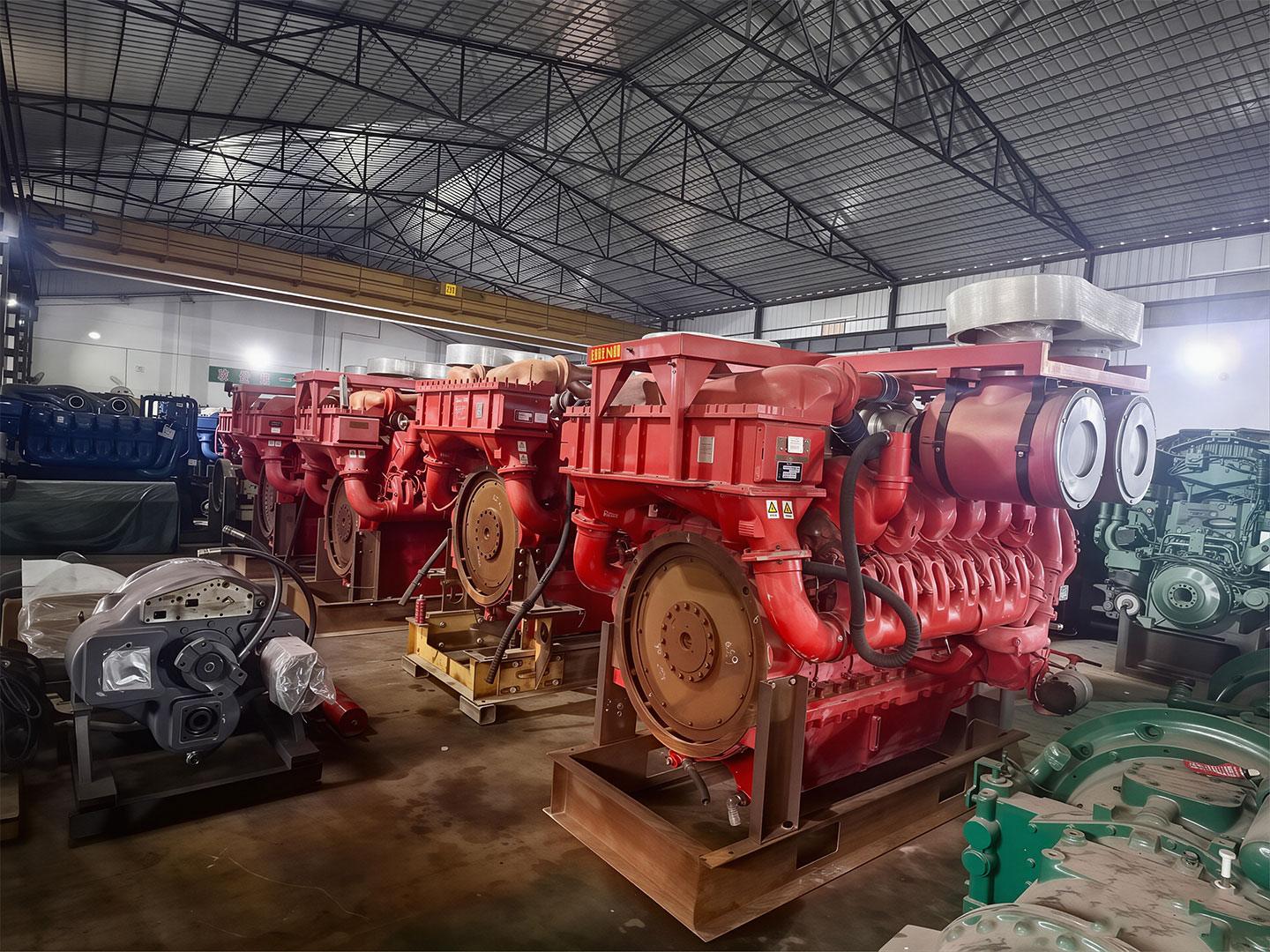
A used CAT 3512 generator inquiry should not begin and end with the words “CAT 3512 available?” That question is too broad for a supplier to quote responsibly. A serious buyer needs to confirm the rating, frequency, voltage, duty use, alternator, control system, condition and export schedule before comparing price.
The 3512 family is usually discussed by industrial buyers because they are looking at heavy standby or project power rather than small commercial backup. For mining sites, factories, remote facilities and dealer resale stock, the real issue is not whether the name Caterpillar appears in the listing. The issue is whether the unit being quoted matches the load, site frequency and inspection evidence required before payment.
Start with the duty: standby, prime or replacement stock
A buyer sourcing a used Caterpillar 3512 generator should first define how the machine will be used. Standby use, prime use and resale stock are different buying jobs.
- Standby backup buyers care about starting reliability, control-panel status, breaker condition and whether the unit can take the expected site load during an outage.
- Prime or remote-site buyers need stronger information on running hours, cooling system condition, service history and whether the unit has been tested under load.
- Dealer stock buyers need current photos, model details, frequency, kW range and enough proof files to quote their own customers quickly.
Before asking for a CIF price, send the application and duty. A supplier can then check whether a CAT 3512 unit is the right direction or whether another model, such as Cummins, MTU or a different Caterpillar set, is a better match.
The plate photos matter more than the brochure
With used generator sets, the brochure tells only part of the story. The unit in stock may have a different alternator, voltage, controller, radiator configuration or refurbishment history. That is why plate photos should be requested early.
Ask for clear photos of:
- the generator-set nameplate;
- the engine plate;
- the alternator plate;
- the controller and breaker;
- the radiator and cooling package;
- the hour meter where available;
- current warehouse or workshop photos.
For buyers comparing available stock, HXH Power’s used generator stock page is the practical starting point. The question to send is not “send catalog.” It is “send current CAT/Cummins/MTU units around this kW range, this frequency and this destination port.”
Frequency and voltage can remove a unit from consideration
Many export mistakes start with frequency. A buyer needing 50Hz should not assume that a 60Hz unit will fit the project just because the engine model is attractive. The same applies to voltage and phase requirements. A used generator can be good equipment and still be wrong for the site.
For a fast first check, include:
- 50Hz or 60Hz requirement;
- voltage and phase;
- standby or prime-use requirement;
- expected load or kW range;
- site altitude or high-temperature environment if relevant;
- destination port and preferred trade term.
Project buyers can also route the requirement through HXH’s solution pages when the load is tied to mining, telecom, commercial standby or remote-site power.
Inspection proof should be agreed before payment
Used generator buying has a simple rule: decide what proof is required before the commercial discussion goes too far. If the buyer needs an inspection video, load-test record, more detailed photos, export loading proof or third-party inspection, ask before a deposit is arranged.
The most useful proof package for a CAT 3512 inquiry usually includes:
- current unit photos from multiple sides;
- nameplate and serial number photos;
- controller and breaker photos;
- radiator and base-frame condition photos;
- short running or inspection video where available;
- packing or loading photos before shipment;
- export document checklist if the buyer needs it for internal approval.
HXH keeps export and inspection proof under its project proof page. That material is not decoration. It helps buyers confirm that the quoted unit can be tied to a real shipment and a real inspection process.
Dealers need a stock file they can forward internally
Dealer inquiries move faster when the first reply is not a broad PDF. A better stock file includes brand, model, kW range, frequency, condition notes, current photos and export readiness. That gives the dealer enough information to decide which units are worth discussing with a local buyer.
For repeat dealer buying, use the dealer page and send the country, sales channel, monthly demand, preferred brands and power range. A CAT 3512 requirement can then be checked against available Caterpillar stock and comparable alternatives.
A better CAT 3512 RFQ format
A clear first message saves several days of back-and-forth. Use this structure:
- Required model: CAT 3512 or acceptable alternatives.
- Power range and duty: standby or prime.
- Frequency: 50Hz or 60Hz.
- Voltage and phase.
- Quantity.
- Destination port.
- Application: mining, factory backup, remote site, resale stock or other use.
- Required proof: photos, nameplate, inspection video, load-test record or export loading proof.
That is enough for HXH Power to check current stock and reply with a useful shortlist instead of a generic catalog. Buyers ready to compare available units can send the requirement through the HXH Power contact form.