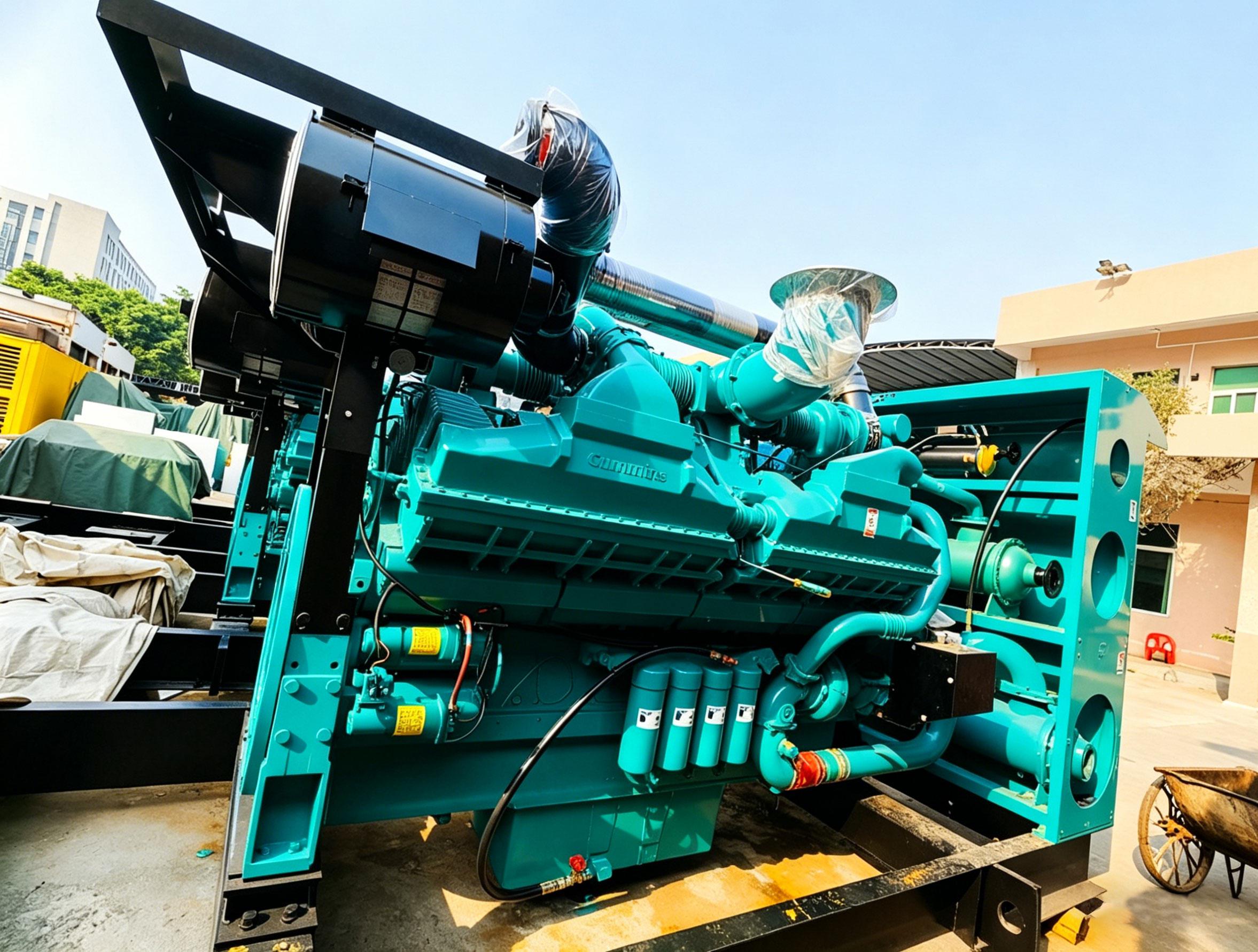
A Cummins QSK60 request usually means the buyer is not shopping for a small standby set. The project may involve mining support, heavy industrial backup, a large pump package, a remote site, or dealer stock for buyers who ask for high-output Cummins units by model name.
For used equipment, the model name is only the starting point. Before a supplier can quote responsibly, the buyer should confirm the rating type, frequency, voltage, condition files and export requirements. A clean QSK60 quotation depends less on a broad catalog and more on the details below.
Confirm the exact model and rating first
Start with the nameplate. Ask for clear photos of the engine plate, generator set plate and alternator plate. The buyer should check whether the unit is being quoted as standby, prime or another duty rating. A used generator can look suitable in a photo and still be the wrong match if the project needs prime duty but the file only supports standby use.
The same check applies to suffixes, configuration and panel details. A QSK60 G-series unit, an engine-only package and a refurbished open-type generator set are not the same purchase. The RFQ should say whether the buyer needs a complete generator set, an engine replacement unit, or a project package that includes radiator, alternator, base frame and control panel.
Frequency and voltage cannot be left for later
For export orders, frequency and voltage are not small details. A 50Hz project and a 60Hz project can require different stock matching, alternator checks and test expectations. The buyer should send the required frequency, voltage, phase, destination country and site application before asking for EXW or FOB quotation.
This is the same discipline covered in HXH Power’s 60Hz used generator export guide. Frequency should be confirmed before the stock file is narrowed, not after the price is already discussed.
Cooling and alternator checks matter on high-load units
High-load generator buyers should ask for more than a front photo. For a used Cummins QSK60 generator, useful files include radiator and fan photos, turbocharger and piping views, alternator end photos, control cabinet photos, wiring condition, and any available test or running video.
Cooling condition is especially important when the unit will work in a hot site, dusty site, mining area or long standby window. The supplier should explain what has been checked and what still needs confirmation before dispatch. Photos do not replace testing, but they help the buyer decide whether the unit is worth a detailed inspection.
| Buyer check | What to request | Why it matters |
|---|---|---|
| Rating and nameplate | Engine, genset and alternator plate photos | Confirms the quoted unit matches the project duty and model requirement |
| Frequency and voltage | 50Hz or 60Hz, voltage, phase and destination country | Prevents a quote for a unit that cannot match the site grid or load |
| Cooling package | Radiator, fan, hose and rear-view photos | Important for hot, dusty or long-running project conditions |
| Control panel | Controller model, cabinet photos and wiring condition | Helps estimate commissioning work and panel replacement risk |
| Export file | Dimensions, weight, packing plan and destination port | Needed for realistic CIF quotation and shipping arrangement |
What HXH Power needs for a faster quote
Send a short, specific RFQ instead of a one-line request for “QSK60 price.” The useful first message includes target power range, 50Hz or 60Hz, voltage, standby or prime use, destination port, application, preferred condition, and whether the buyer needs one unit or a repeat dealer supply file.
If the buyer is still deciding between power ranges, start with the 500kW vs 1000kW used diesel generator sizing guide. If the model is already fixed, send the QSK60 request through the contact page with the required files. HXH Power can then check current stock, inspection photos and export readiness against the project requirement.
When QSK60 is the right conversation
A QSK60 inquiry makes sense when the buyer has a high-load project, a replacement standard tied to Cummins service knowledge, or a dealer market that already asks for large Cummins generator sets by name. It is not the right shortcut for every project. The buyer should still compare load, duty, frequency, condition and transport constraints before approving a unit.
For broader stock options, review HXH Power’s product and solution portfolio. For project-based power supply, the solutions page is the better starting point because the load profile and site environment can change the unit selection.