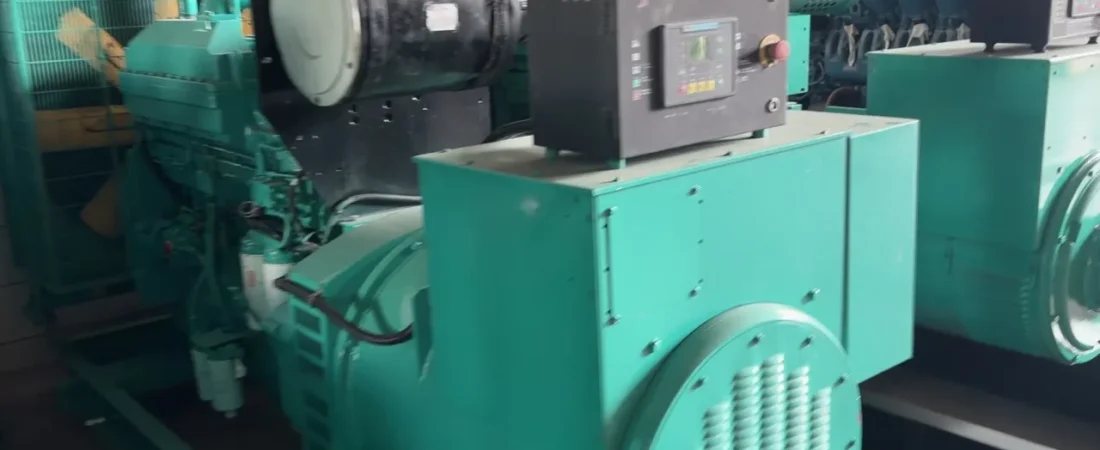
A quotation says Cummins. The engine plate photograph says Cummins. An inspection video shows a generator set in a workshop. Those may still be three different pieces of evidence unless the seller shows how each belongs to the same physical package. For a used-generator export purchase, the job is not merely to collect serial numbers. It is to keep the quoted set, the inspected set and the set prepared for shipment tied together.
A serial-number check is not an OEM authenticity certificate, a title search or a substitute for an independent inspection. It is a buyer’s method for preventing the file pack from drifting between units while an RFQ becomes a quotation, a deposit and finally a shipment. The chain should be visible in documents that someone other than the salesperson can review.
Start with one identity sheet for the offered set
Ask the seller to prepare a sheet for the exact generator set offered, not for a model family. It should list the engine model and serial number, alternator model and serial number, package or set identifier where one exists, controller identification, electrical configuration shown on the actual plates, current location and the date each item was observed. Unknown entries belong in an “unknown” column. A brochure or an earlier stock-list row is not evidence that the current unit carries those plates.
An industrial generating set can contain separately identified components. An engine serial and an alternator serial are not interchangeable. A package identifier may be assigned by the assembler rather than the engine manufacturer. If an alternator, controller or engine was replaced, request the change history and current configuration instead of treating every different identifier as an error to hide. The HXH Products page is a category starting point; it cannot stand in for a unit-specific identity sheet.
Put the quotation revision and date on the sheet. If the seller changes the offered set during negotiation, issue a new revision rather than silently editing the old one. This small discipline matters when several similar packages are parked in the same warehouse.
Photograph context before photographing characters
A cropped close-up can make a serial number legible but says little about the package it belongs to. Ask for a whole-set overview, an engine-side view locating the engine plate, a readable engine-plate close-up, an alternator-side view and a readable alternator-plate close-up. Where practical, ask the seller or inspector to record the sequence in one continuous session. Preserve the original files, capture dates and quote revision with the inspection pack.
Neither a timestamp nor a continuous video alone proves ownership, authenticity, condition or stock availability. It simply makes the relationship between a plate and a physical machine easier to audit. If a plate is obscured, damaged or inconsistent with the written specification, record the exception and request qualified inspection. Do not reconstruct missing characters from a low-resolution image.

Reconcile the identity across the evidence pack
Place the identity sheet beside the quotation, inspection report, maintenance history, load-test report and proposed shipment documents. Compare the model and serial entries, electrical configuration and location. The load-test report guide explains why a test sheet is useful only when it identifies the tested set and conditions. The maintenance-record guide covers the historical side: a generic service invoice for the same model is weaker than a record traceable to the actual engine or package.
Ask who created each record and when. A photograph from a previous warehouse location, a test sheet missing a unit identifier or a stock list updated after the quote may have a reasonable explanation. The seller should document the explanation and provide the revised trail. Copying one serial number into every file after the fact does not resolve the underlying discrepancy.
Keep a short exception log: which field differs, which document carries each value, who will investigate, what evidence is still missing and whether the difference changes the proposed unit or contract. This is more useful than a binary “matched” stamp when a component has legitimately been changed.
Use manufacturer information to interpret, not to certify
The official Cummins QuickServe Online route and STAMFORD | AvK owner-manual library are appropriate starting points for component-specific documentation. Some service information requires credentials or an authorized party. An accessible page, a matching model name or a search result is not a certificate that the photographed machine is genuine, complete or in the condition claimed.
If rating, model or configuration interpretation is material to the deal, ask a qualified engineer or authorized service source to review the actual plates and records. This article does not prescribe serial-number formats or imply that every manufacturer uses one identification scheme. The buyer should distinguish a manufacturer document that describes a component family from evidence tying that document to the component in the quoted set.
Carry the same unit through inspection and loading
Agree before inspection which plates the independent inspector will photograph and cite in the report. Ask for an explicit note when a plate cannot be reached. At loading, retain views connecting the package identifier and visible unit features to the inspected set. The pre-shipment inspection checklist and shipment-proof guide cover later evidence stages. None of these files alone replaces title documents, contract terms or a sound payment process.
If the seller changes the offered unit after inspection, the original report should not quietly travel with the replacement. Reopen the identity sheet, revise the quote and agree which inspection or testing must be repeated before money moves. A buyer should know exactly which physical set a deposit reserves and which documents will be delivered before final payment. The shipping label and bill of lading should be checked against the final agreed transaction file, not just an early marketing photograph.
Keep the request proportionate to the transaction
Not every package has an assembler-issued set number or the same documentation history. Do not demand a document that a specific manufacturer or configuration never issued. Instead, ask the seller to identify the available engine, alternator and package references, show how those references map to the machine, and disclose what cannot presently be verified. Missing evidence can change the inspection plan, deposit conditions or decision to proceed; it should not be filled with invented data.
For multiple similar sets, use a separate identity sheet and evidence folder for each unit. A single warehouse video or one nameplate photograph should not be copied across a batch. If the quotation covers an unspecified stock choice rather than one reserved set, say that clearly and define when the final unit will be identified and independently checked.
A compact RFQ request for serial-number proof
Ask the supplier to identify the exact offered set; provide current whole-set and plate photographs; list engine, alternator and package identifiers; cross-reference inspection, service and test files; state any replaced components, missing fields or document conflicts; and explain how the same set will be identified before shipment. Request the current location and the person who will permit an independent check. The result should be a concise, versioned evidence pack, not a collection of unrelated images.
Send the proposed evidence list through HXH Contact with the required rating, frequency, destination and intended duty. HXH can clarify which unit-specific files are available for a particular offer. A model family, sample nameplate or warehouse photograph must never be represented as proof of a quoted unit’s present identity, condition, availability or performance.
Frequently asked questions
Does a matching engine serial number prove the whole generator set is the quoted unit?
No. The alternator, controller and package can have separate identifiers. The buyer needs a traceable relationship between the component plate, whole-set views, quote and inspection file.
What if a nameplate cannot be photographed clearly?
Record the limitation, seek another viewing angle or qualified inspection, and keep the entry unresolved until there is reliable evidence. Do not infer missing characters from a brochure or another unit’s plate.
Can a sample HXH nameplate be used in my purchase file?
Only as an example of the detail to request. It is not evidence about a different offered unit. The transaction file must use images and documents from the exact set being quoted and inspected.