Before a buyer pays a deposit on a used generator, the question is not whether the supplier can send another photo. The question is whether the file set proves the exact unit being quoted, the condition being discussed and the shipment basis being priced.
This matters more in cross-border used equipment than it does with ordinary catalogue goods. A 500kW, 1000kW or 1500kW generator may look similar in a thumbnail, but the value changes quickly once the buyer checks the engine model, alternator, hours, control system, frequency, voltage, test condition and loading plan. A deposit should be supported by a practical proof file, not by a loose group of attractive warehouse pictures.
Start with the exact generator, not a catalogue picture
The first check is simple: every photo and document should point back to the same unit. A supplier should be able to show the generator from several angles, including the engine side, alternator side, control panel, radiator end and base frame. If the quote is for a Cummins, Caterpillar, MTU or gas generator set, the buyer should not accept a generic stock photo as the main proof.
For a current stock enquiry, ask the supplier to connect the product photos with the available stock list. The useful file is not only a clean image; it is a file that helps the buyer confirm model, power range, voltage, frequency and physical condition before asking for a freight check or EXW or FOB quotation.
Match the quote to nameplate and condition files
A buyer should ask for nameplate and condition proof before treating a price as firm. For used diesel generators, the key files normally include engine nameplate photos, alternator nameplate photos, control panel photos, visible hour meter information where available, and photos of the radiator, silencer, base frame and wiring cabinet. If the unit has been rebuilt or refurbished, the buyer should also ask what was replaced or serviced.
This is the stage where many weak quotes fall apart. A low price is not useful if the unit cannot be matched to the quoted model, or if the supplier cannot explain the difference between standby, prime and continuous use. Buyers comparing several offers should keep the proof files beside the commercial quote, not in a separate chat thread where details are easy to lose.
What shipment proof should show
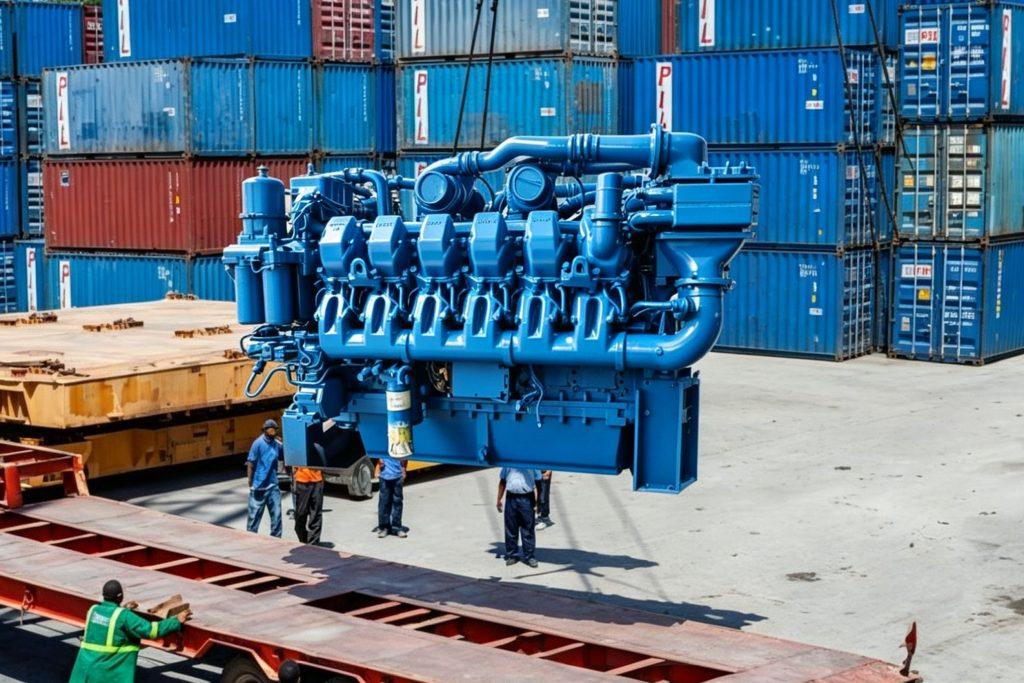
Shipment proof becomes important once the buyer has selected a unit and is moving toward deposit or loading. Useful proof normally shows how the unit is prepared for export: lifting, packing, truck loading, port delivery or container loading where applicable. The purpose is not decoration. The purpose is to confirm that the supplier can move large industrial equipment through a real export process.
- Current photos of the exact generator or engine being quoted.
- Engine, alternator and control panel nameplate photos.
- Basic condition photos, including radiator, base frame and cabinet areas.
- Inspection notes or test-run video where the project requires it.
- Loading or transport photos tied to the same unit or shipment batch.
- Packing list and commercial documents when the shipment stage begins.
- Destination port and Incoterm basis when the buyer requests a CIF quote.
Buyers can compare this list with a fuller generator inspection before shipment checklist when the order is for a remote site, mining project, backup power room or repeat dealer purchase.
What a CIF quote does and does not confirm
A CIF diesel generator quote usually includes the equipment price, export handling and sea freight to the destination port. It does not, by itself, prove the technical condition of the unit. Buyers should therefore keep two checks separate: commercial route and technical proof. The CIF basis can help compare landed cost, while the proof file helps confirm whether the quoted equipment is acceptable.
For projects where freight changes quickly, the destination port, generator size, weight and loading method should be confirmed early. A 40-foot container plan, flat rack plan or truck-to-port plan can change the freight discussion. Buyers can use the CIF diesel generator quote checklist to organize these questions before requesting a final price.
A practical file request before deposit
For most used generator purchases, the buyer does not need a long brochure before deposit. A tighter request works better: exact model, rated output, voltage and frequency; current stock photos; nameplate photos; basic condition notes; delivery port; quantity; and any project environment details such as standby use, prime use, mining site, factory backup or telecom backup.
Dealers buying for resale should also ask whether similar units are available in the same power range. Project buyers should ask whether the supplier can support inspection, export loading proof and shipment documents. If the buyer needs repeat stock files for customers, the dealer cooperation page is usually the right path.
When photos should raise questions
There are several warning signs. The supplier only sends cropped images. The same photo is used for several different models. The nameplate is missing or unreadable. The unit in the loading photo does not match the quoted unit. The quote mentions 50Hz or 60Hz but the proof file does not support it. The buyer asks for a destination port quote, but the supplier cannot explain the basic loading route.
None of these points automatically means the supplier is dishonest. Sometimes files are simply disorganized. But for an export buyer, disorganized proof is still a commercial risk. A serious supplier should be able to clean up the file set before the buyer pays a deposit.
How HXH Power prepares proof files for export buyers
HXH Power supplies used and refurbished industrial power equipment for dealers and project buyers. For stock enquiries, the team checks available units by model, power range and condition, then prepares relevant photos and quote details instead of sending a broad catalogue. For export orders, shipment and loading proof can be provided as the order moves through inspection, packing and delivery.
Buyers who are comparing current stock can start from the product inventory page, review recent project and export proof examples, or send a direct RFQ through the contact page. The fastest useful enquiry includes model or kW range, destination port, voltage, frequency, quantity and intended use.
Buyer takeaway
A used generator quote should stand on a proof file. Before deposit, buyers should confirm the exact unit, key nameplates, condition details, inspection or test evidence where needed, shipment route and CIF basis. That discipline helps a buyer compare suppliers on more than price, and it reduces the chance of paying for a generator that was never properly matched to the project.