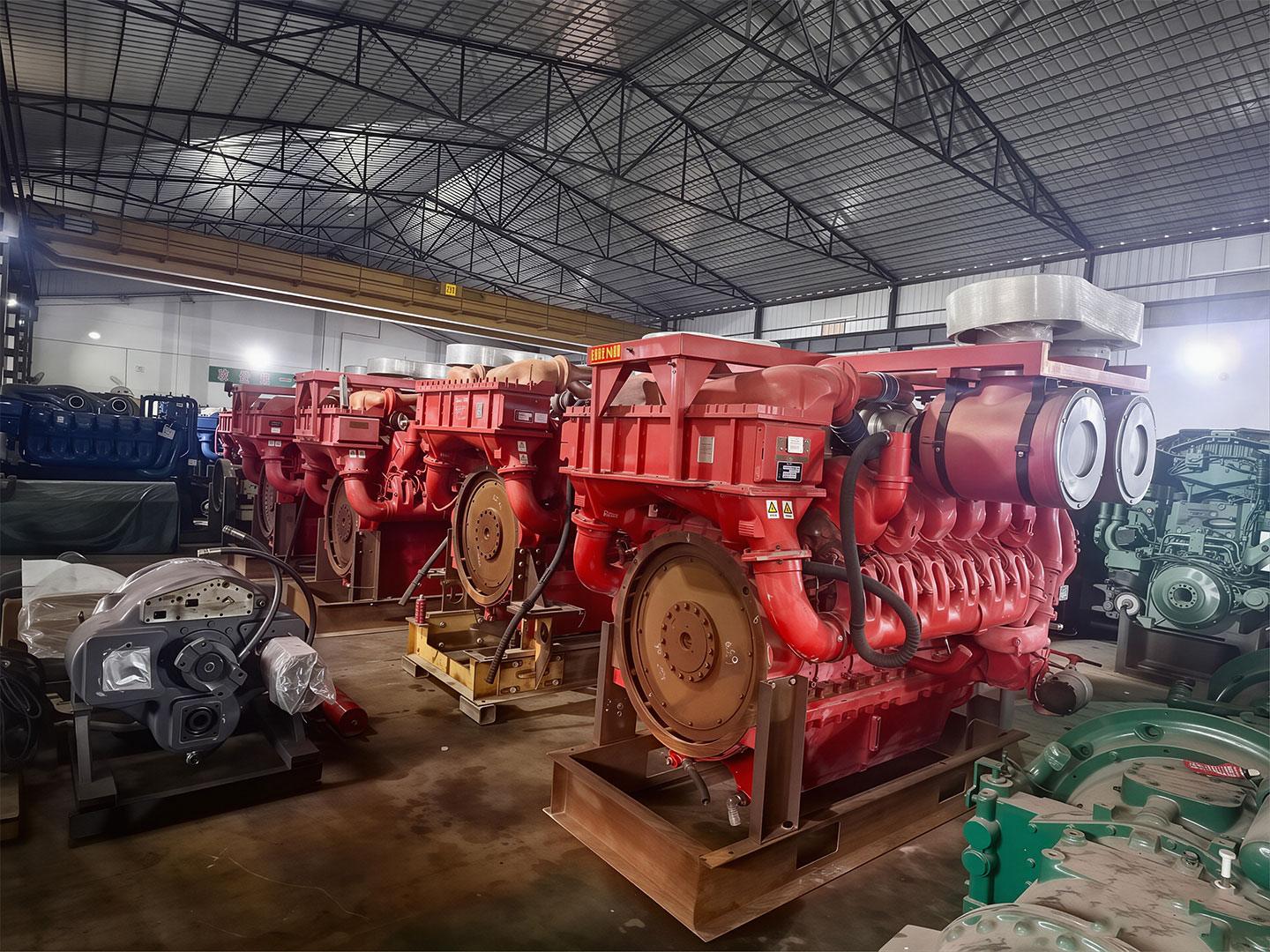
CAT 3512 and Cummins KTA50 often appear in the same buying conversation because both sit in the high-power industrial generator range that dealers and project buyers care about. A buyer may be sourcing for mining, a plant, a commercial backup project, a remote site, or a resale customer who needs a recognizable engine name. The mistake is treating the model comparison as a brand argument. For a used generator, the better question is which exact unit can be documented, matched to the load, shipped correctly, and supported after arrival.
Caterpillar lists 3512 generator sets in both 50 Hz and 60 Hz versions, including published high-power standby, prime and continuous application ranges. Cummins lists KTA50 generator information in the high-power 50 Hz class with prime, standby and data center continuous ratings that depend on configuration. Those official pages help define the class of equipment. They do not replace checking the actual used unit sitting in stock.
Compare the job first, then the model
Before comparing CAT 3512 and Cummins KTA50, confirm the site duty. A standby system for a factory has a different risk profile from a mine camp, telecom aggregation site, rental reserve unit, or dealer resale order. The same model name can look attractive on paper and still be wrong for the buyer’s load, voltage, frequency, delivery timing, or service expectations.
A useful inquiry should include required kW or kVA, 50 Hz or 60 Hz, voltage, standby or prime use, destination port, quantity, and whether the buyer needs a complete generator set or a major component. Without that, the supplier is only matching a model name, not a working power package.
CAT 3512 may suit buyers who want Caterpillar familiarity
Many buyers ask for CAT 3512 because Caterpillar has broad recognition in mining, construction, oilfield, commercial standby and industrial power applications. The official Cat 3512 pages show 50 Hz and 60 Hz generator set versions in high-power ranges, so it is a serious option when the site requires a large diesel package rather than a smaller standby unit.
For a used CAT 3512 quotation, the buyer should ask for the complete package details: engine plate, alternator plate, controller, radiator package, breaker cabinet, base frame, running or test information when available, and any known refurbishment or replacement work. The name CAT 3512 alone is not enough to decide price.
KTA50 may suit buyers comparing Cummins high-power stock
Cummins KTA50 is also a common high-power inquiry, especially where the buyer already works with Cummins engines or has downstream customers asking for Cummins equipment. The official Cummins KTA50 generator page lists the model in a high-power 50 Hz class, with ratings that vary by exact generator-set configuration.
For export buyers, the practical check is the same: plate photos, alternator and controller details, cooling package, cabinet condition, current photos, known service history, and whether the unit is a complete generator set or a partial replacement unit. HXH has a separate model-level note on used Cummins KTA50 generator buying checks for buyers who are already leaning toward KTA50.
Do not compare only the headline rating
Two used units can carry familiar model names and still differ sharply in usable value. Alternator rating, frequency, voltage, controller, radiator, breaker, canopy or open-set configuration, hours, test status, refurbishment work and missing parts all affect the real quotation. A cheaper unit with weak documentation may cost more after shipping than a better documented unit with a slightly higher initial price.
Buyers should ask for a file that can be reviewed by procurement and engineering, not only a few clean photos. The HXH guide on generator inspection before shipment explains the kind of evidence that helps remote buyers reduce avoidable risk before payment.
Check frequency and destination before reserving stock
Frequency mismatch is a common export problem. A 50 Hz site and a 60 Hz site are not interchangeable simply because the engine family looks familiar. Destination country, voltage, phase and grid standard should be confirmed before a unit is reserved. This matters for both CAT 3512 and Cummins KTA50, especially when the buyer is serving multiple resale markets.
If the buyer is sourcing for a 60 Hz market, the existing HXH note on 60 Hz used generator export checks is worth reviewing before comparing individual models.
For dealers, proof files matter as much as the model
A dealer does not only need a generator. The dealer needs enough proof to quote a customer quickly: current photos, model and rating evidence, condition notes, key component photos, stock availability, destination port quotation and shipment proof after order confirmation. A recognizable CAT or Cummins name helps, but the proof file is what turns the stock into a usable resale offer.
For project buyers, the same proof supports internal approval. A buyer who can show clear unit photos, plates, test notes and export documentation will usually move faster than a buyer relying on a model name and a price line.
What to send HXH for a useful comparison quote
Send the required power range, frequency, voltage, application, destination port, target shipment time, quantity, preferred brand if any, and the proof file your customer or engineering team needs. If both CAT 3512 and Cummins KTA50 are acceptable, say so. HXH can then check available used diesel generator stock, compare nearby units, and send a quotation package that fits the actual inquiry.
For a model-specific request, use the product detail page. For dealer stock or repeat sourcing, use the dealer inquiry page or contact HXH through the contact page.