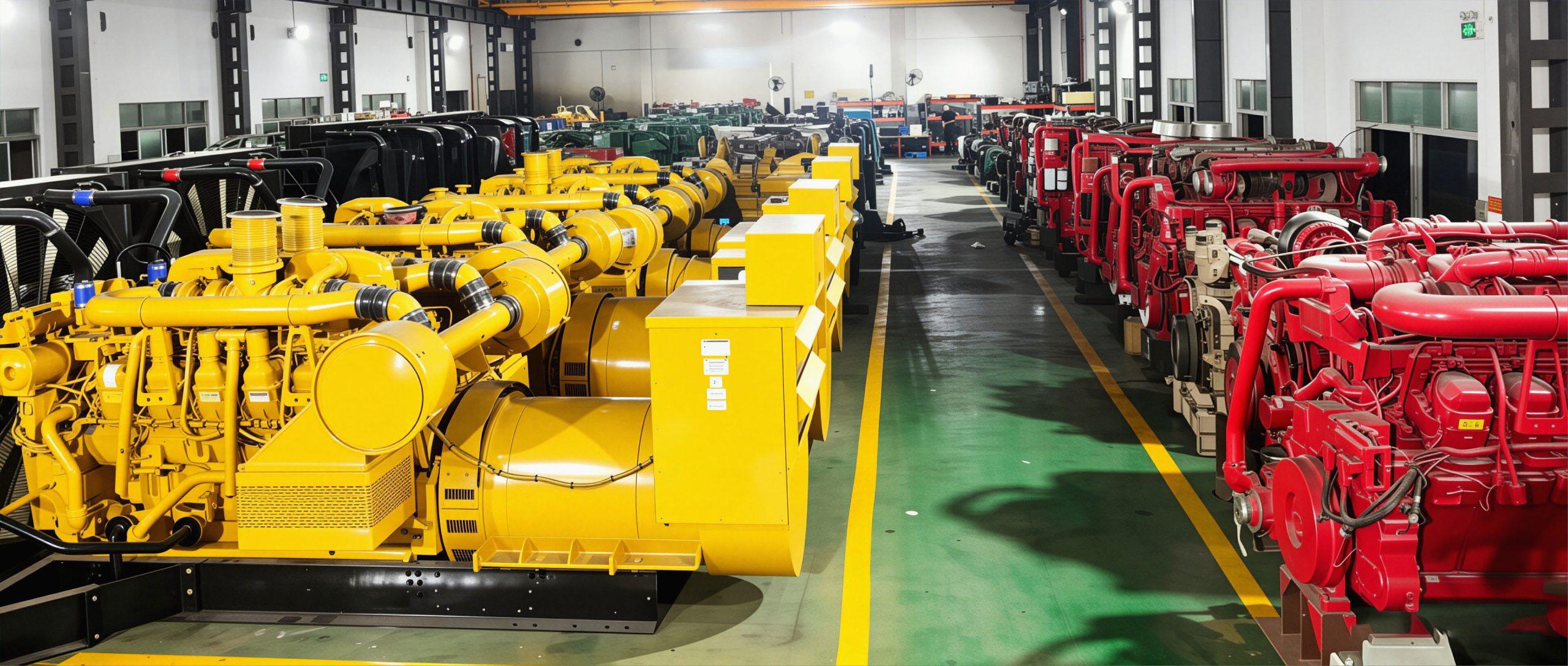
A used generator may spend months between its last operating site and an export quotation. During that interval it can sit in a warehouse, an open yard, a workshop queue or a dealer’s stock area. The phrase “stored generator” does not tell a buyer which of those conditions applied or what was checked before the machine was offered again.
Used generator storage records should connect the inactive period to the exact unit and to a current recommissioning test. They are not proof of condition. They help a buyer identify what is documented, what remains unknown and which checks must be completed before a deposit or shipment.
Define the storage period before discussing condition
Begin with dates. Ask when the generator last operated under load, when it left the previous site, when the supplier received it and when the latest start or test took place. If those dates are unavailable, record the gap instead of replacing it with an estimate.
The location matters as much as the duration. Indoor covered storage, an enclosed workshop and an exposed yard create different inspection questions. Request dated arrival photographs and current photographs that show the complete set, engine, alternator, controller, radiator, base frame and any canopy or container. The background should make the storage setting reasonably clear.
This article is about inactivity and return-to-service evidence. For oil changes, repairs, parts and previous workshop jobs, use the separate HXH guide to used generator maintenance records.
Keep the serial-number trail continuous
A storage file is useful only when it belongs to the quoted machine. Ask for readable photographs of the generator-set plate, engine plate, alternator plate and controller model. Match these details to the quotation, stock reference, arrival record, inspection sheet and current test file.
If an engine, alternator, controller or hour meter was changed during storage, the supplier should state the change and show the new identity. A warehouse photograph of several similar generator sets is good context, but it does not prove which unit received a particular preservation action.
Request one current walk-around video that begins with the plates and continues around the unit without an unexplained cut. It can help connect visible condition, controller display and starting sequence to the same generator. It is still supporting evidence, not a substitute for an agreed inspection.
Ask what preservation work was actually recorded
Manufacturers publish model-specific storage and return-to-service procedures. The applicable steps vary by engine, alternator, cooling package, storage environment and length of inactivity. A supplier should identify the manual or service information used instead of claiming that every generator follows one universal preservation checklist.
For the quoted unit, ask for dated records of the actions that were completed and the condition observed. Depending on the equipment and the manufacturer’s instructions, the file may address protection of openings, corrosion control, fluids, batteries, belts, hoses, wiring, filters, coolant system, fuel system and the alternator. The record should distinguish completed work from work still planned before shipment.
Do not accept “preserved for storage” as a complete description. Ask who performed the work, on what date, under which procedure and how the unit was identified. When no formal preservation took place, that limitation should be disclosed and reflected in the recommissioning scope.
Document the storage environment and visible changes
Buyers need evidence of where the generator stood and what changed while it was inactive. Useful records may include periodic photographs, inspection notes and a simple location log. Look for signs that require closer review: water marks, dust entry, damaged covers, corrosion, loose wiring, animal or insect entry, fluid leakage, deteriorated hoses, flat or removed batteries and contamination around the fuel or cooling system.
A repaint before sale can improve presentation and corrosion protection, but it also makes the earlier photographs important. Ask for images before surface preparation and after it. Fresh paint should not be presented as proof of internal preservation or mechanical condition.
The HXH refurbished generator condition checklist explains how to separate cosmetic work from documented mechanical and electrical work.
Review batteries, fluids and fuel as separate records
Starting batteries may be disconnected, maintained, replaced or left with the unit. Ask which occurred, when it occurred and what battery is included in the current quotation. A successful assisted start does not by itself prove that the supplied battery set is ready for the buyer’s site.
For engine oil, coolant and fuel, request the last known service date, any work completed during storage and the status at the latest inspection. Avoid assuming that a clean appearance confirms suitability. Fluid selection, replacement and recommissioning steps should follow the correct manufacturer information for the identified engine and package.
If old fuel was drained, a tank cleaned or filters replaced, the job sheet should say so. If the supplier cannot verify the inactive-period fuel condition, the quotation should leave that point open and define what will be checked before shipment.
Give the alternator and control system their own checks
The engine may start while electrical questions remain unresolved. Ask how the alternator, terminals, space heaters where fitted, controller, battery charger, sensors and wiring were protected and inspected during the inactive period. Any electrical measurements should identify the instrument, date, unit and test conditions.
Moisture, contamination and connection condition cannot be judged from an engine-running video alone. The applicable alternator manual should guide inspection and any required testing. STAMFORD | AvK, for example, maintains an owner-manual library for model-specific reference.
Use the HXH guide to alternator and control-panel inspection to structure the electrical evidence separately from engine history.
Require a written recommissioning record
Recommissioning should be documented as a sequence, not reduced to a short clip showing that the engine started. Ask for the pre-start inspection, actions completed, fluids or parts changed, batteries used, faults found, alarms reviewed and unresolved work. The record should show the date and exact machine identity.
A cold-start video is more useful when it begins with the plates and controller, shows the pre-start state and continues through warm-up. If the set had already been warmed or externally assisted, the supplier should state that. The purpose is not to create a dramatic video; it is to make the test conditions clear.
Manufacturer service systems such as Cummins QuickServe Online can help identify service information for the relevant engine. The supplier and buyer should still confirm that the serial number and generator configuration match the documents being used.
Connect recommissioning to a current load-test file
An unloaded start confirms only a limited part of the package. Before export, agree the current test scope for the exact unit. The file should state the available load, test duration, voltage, frequency, phase, instruments, readings, alarms and ambient conditions. If full-rated load is not available, record the actual test rather than using the undefined phrase “fully tested”.
Compare the recommissioning date with the proposed shipment date. A machine tested and then stored again for a long interval may need another agreed check before loading. The buyer should know whether the quoted evidence represents the unit now or only an earlier point in its stock history.
Remote buyers can use the generator inspection before shipment checklist to define identity, video order and test evidence.
Grade the evidence instead of treating it as complete or missing
| Storage claim | Evidence to request | Buyer conclusion |
|---|---|---|
| Stored indoors | Dated arrival and periodic photographs, location record | Confirms documented periods only |
| Preserved before storage | Unit-specific job sheet, date, procedure and technician | Assess the recorded scope, not the label |
| Started regularly | Dated start log tied to the serial number, with faults noted | Shows recorded starts; does not replace load testing |
| Battery maintained | Battery identity, maintenance or replacement record, current test | Check what battery is included in the sale |
| Ready to run | Recommissioning checklist and current operating test | Valid only for the documented conditions and date |
| No storage history | Written disclosure plus expanded current inspection | Unknown history becomes a defined buying risk |
Put storage gaps into the RFQ and quotation
Send the required kW or kVA, voltage, frequency, phase, duty, application, destination port and inspection method. Add a request for last-operation date, storage locations, preservation records, current defects, recommissioning file and available test capacity.
The quotation should state which records are available, which checks are included before shipment and which conditions remain unverified. If additional work is required, define whether it is included in the price and what evidence will be supplied before balance payment. Storage history should not be hidden inside a general promise that the generator is “ready.”
After the test file is accepted, align it with the export package. The HXH guide to generator shipping documents by Incoterm explains how equipment evidence and shipping responsibility remain separate parts of the order.
What HXH buyers should send
Review current HXH generator listings and identify the unit or model family of interest. Then use the HXH enquiry page to send the application, electrical requirements, destination and requested inspection method.
Ask specifically for the available storage and recommissioning evidence for that unit. Record availability will vary by machine, and missing history should be stated rather than reconstructed from a current photograph.
Frequently asked questions
Is a successful start enough after long storage?
No. It shows that the engine started under the observed conditions. Buyers should still review identity, preservation, visible condition, electrical checks, faults and the agreed load-test evidence.
What if the supplier has no storage log?
Ask for a written disclosure and a wider current inspection and recommissioning file. Missing history is a risk to define, not proof that the generator is good or bad.
Should every stored generator follow the same checklist?
No. The engine, alternator, package, environment and inactive period affect the applicable procedure. Use the manufacturer information for the identified equipment.
Can warehouse photographs prove preservation?
They can support location and visible-condition history. They do not prove internal work, fluid condition, electrical measurements or current performance without unit-specific records.
Reference resources: Cummins QuickServe Online service information; STAMFORD | AvK owner manuals.