A commercial backup diesel generator inquiry should give the supplier enough information to match a real unit, not just send a rough price. For factories, malls, hotels, office buildings and public facilities, the backup power discussion usually fails when the buyer asks for “one generator for the building” without load, frequency, voltage, duty or installation notes.
Used and refurbished generator sets can be a practical option for commercial standby projects, but only when the buyer checks the machine and the quote in the same file. The supplier needs to know what the generator will support, where it will be shipped, and which proof files are required before payment.
Define what the generator must keep running
The first RFQ question is not brand. It is load. A factory may need to keep production equipment, pumps, compressors, lighting and office loads online. A mall or hotel may focus on elevators, fire systems, refrigeration, security, water pumps and selected air-conditioning loads. An office or public building may need a smaller emergency load than the total connected load.
Before asking for stock, the buyer should separate essential loads from non-essential loads. If motor starting is involved, say so. If the generator must support elevators, pumps or chillers, the supplier needs to know because starting current may affect the required power range and alternator selection.
For broader sizing checks, see the 500kW vs 1000kW used diesel generator sizing guide.
Confirm standby, prime or occasional backup use
Commercial buyers often use the word “backup” loosely. Some sites only need emergency standby power during grid outages. Others need regular running because the grid is weak, unstable or unavailable for long periods. That difference changes how a supplier should read the rating and condition files.
For an RFQ, state whether the unit is for standby, prime, continuous or temporary backup use. Also include expected running hours, fuel availability, site environment and whether the buyer already has switchgear, ATS, fuel tank, silencer, canopy or container requirements. A supplier can only match a useful unit when those items are visible early.
Check frequency, voltage and site standard before price
A commercial generator quote is not ready until frequency and voltage are clear. Export buyers should confirm whether the site needs 50 Hz or 60 Hz, the required voltage, phase and whether local technicians can support the control system. A unit that looks attractive in the stock file may still be wrong if the frequency or voltage does not match the project.
When a buyer is unsure, the safest path is to confirm the local site standard before asking for a final CIF price. The 50Hz vs 60Hz export checklist covers the basic points to check before comparing used generator options.
Ask for current stock files, not old project photos
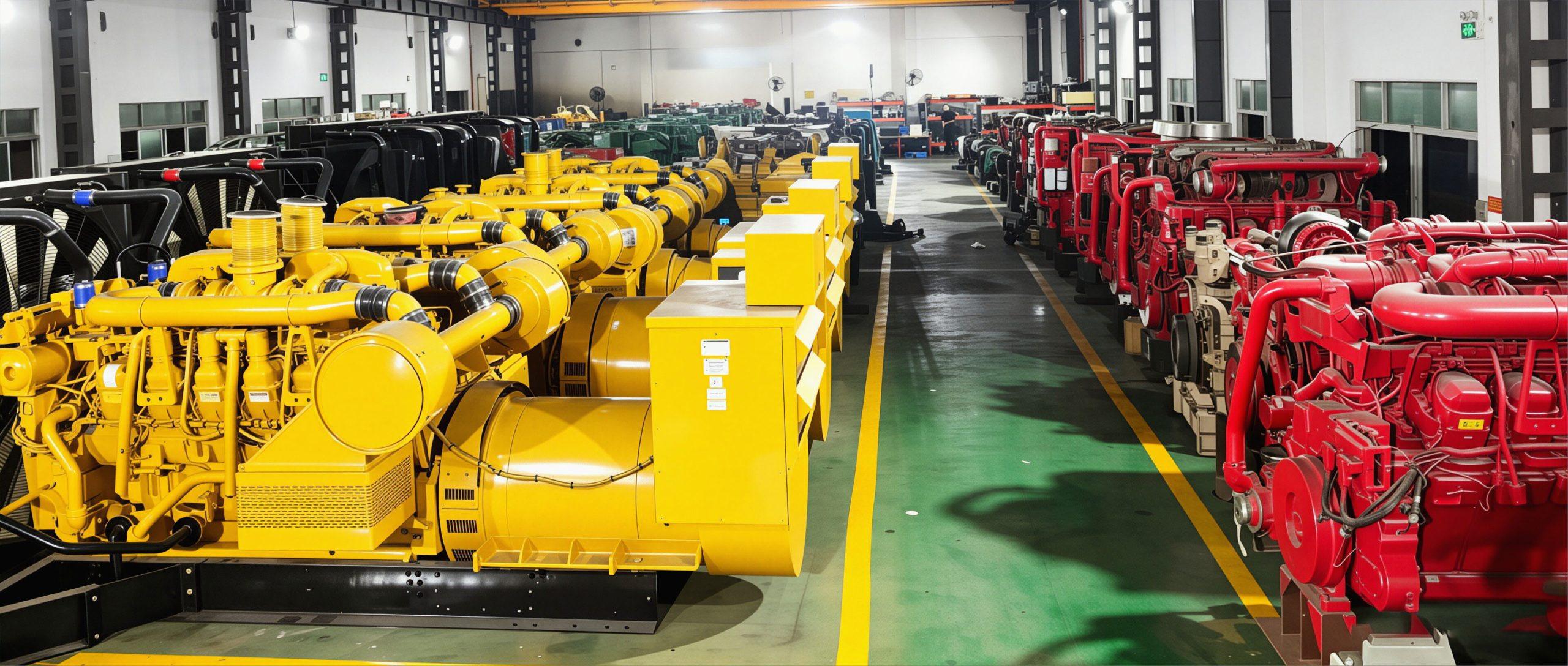
A commercial backup buyer needs to see the actual unit being quoted. The supplier should provide current wide photos, nameplate images, controller and alternator photos, radiator and base frame condition, visible wear points, and running or test evidence where available.
Past project photos can help show experience, but they should not replace current stock proof. If the quoted generator is not photographed clearly, the buyer cannot compare condition or included components. This is especially important when the buyer is sending the file to a consultant, contractor, procurement team or end customer for approval.
Use the generator inspection before shipment checklist before treating a quoted unit as confirmed.
Compare the quoted scope item by item
Two commercial backup generator offers may use similar model names but cover different equipment. One quote may include a complete generator set with alternator, radiator, controller and base frame. Another may quote only an engine or an incomplete unit. Some quotes include packing and export loading support; others do not.
Before comparing price, ask each supplier to state:
- brand, model and rated power range;
- standby, prime or continuous rating basis;
- 50 Hz or 60 Hz and voltage;
- complete generator set or component-only scope;
- included controller, alternator, radiator, base frame and accessories;
- estimated dimensions, weight and packing method;
- inspection photos, running video or test file availability;
- destination port and shipping basis for CIF quote requests.
For dealer or multi-unit inquiries, the buyer should also state the resale market and acceptable power range. A stronger request helps the supplier send relevant units instead of a broad catalog. The stock-list format is covered here: what dealers should send when requesting a used generator stock list.
Do not let the CIF price hide the cargo plan
Commercial generator buyers often ask for CIF because it is easier to compare a delivered port price. That is reasonable, but a CIF price is only useful when the cargo basis is clear. Large generator sets may need different packing, loading or special-cargo handling depending on size, weight and configuration.
The buyer should confirm whether the quoted price is based on the actual unit dimensions and weight, not a rough model estimate. If loose accessories, canopy, silencer, fuel tank or separated components are involved, they should be included in the shipping discussion before the final quote.
For export quote preparation, see what buyers should confirm before comparing CIF diesel generator quotes.
What to send HXH Power for a commercial backup generator quote
For a faster commercial backup diesel generator check, send the required kW or kVA range, 50 Hz or 60 Hz, voltage, standby or prime use, essential load type, quantity, preferred brand, destination port and expected purchase timing.
HXH Power can then screen current used and refurbished diesel generator stock, prepare relevant photos and condition files, and quote with a clearer export basis. The more complete the RFQ, the less time is lost comparing offers that were not based on the same duty, scope or shipment plan.
Contact HXH Power to request available commercial backup diesel generator stock, inspection files and CIF quote support.