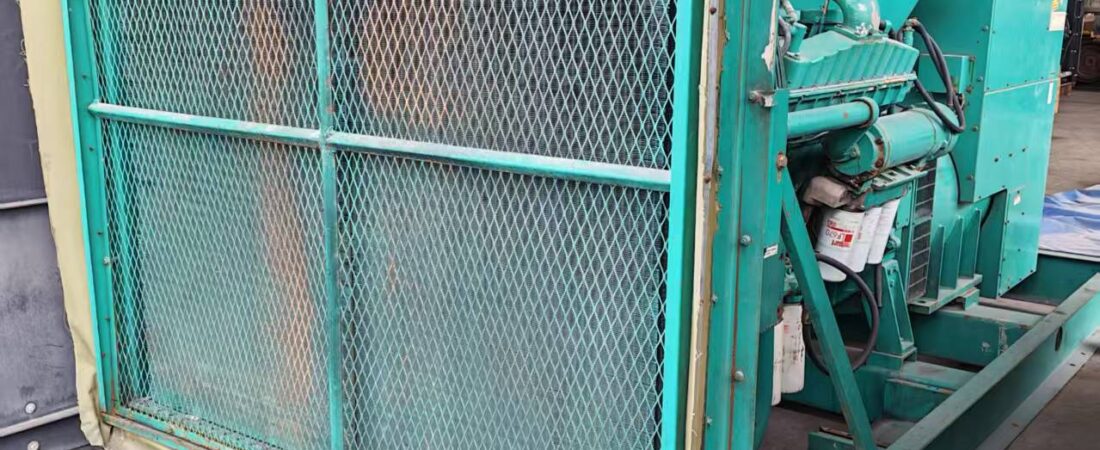
A radiator that looks clean in one photograph can still leave an export buyer with unanswered questions. The visible core may be blocked, repaired or stained. Hoses and clamps may have been replaced without a record. A short no-load video may show a stable temperature while saying little about how the package behaves under the load and ambient conditions that matter at the destination.
A used generator radiator inspection should therefore produce a unit-specific evidence file, not a general statement that the cooling system is “good.” Before an RFQ, deposit or shipment, the buyer needs to know what was inspected, what was tested, which conditions applied and what remains unresolved.
Start with the exact generator and cooling-package identity
Cooling systems are package-specific. Two generator sets with the same engine family may use different radiators, fan arrangements, guards, expansion tanks, hose routing or enclosure ventilation. Begin with clear photographs of the generator-set plate, engine plate and any radiator or package identification. Match them to the quotation and current inspection file.
Ask for one wide photograph from the radiator end, one engine-side view and one opposite-side view. A continuous walk-around video can help connect the radiator, fan area, hoses, controller and nameplates to the same machine. If a radiator or cooling package was changed, the supplier should identify the replacement and record when the work occurred.
This identity step should align with the broader HXH guide to generator inspection before shipment. It prevents a close-up from another unit being treated as evidence for the quoted set.
Inspect the radiator core from both accessible sides
Request straight-on, well-lit photographs of the accessible radiator-core faces. Look for bent fins, packed dust, oil film, corrosion, impact damage, uneven coloration and areas that appear recently repaired. The purpose is not to diagnose internal performance from a photograph. It is to identify visible conditions that require cleaning, repair records or a closer physical check.
Ask how the core was cleaned. Aggressive pressure, unsuitable chemicals or poor fin straightening can create new damage. If cleaning was completed, request before-and-after images and the job record. If part of the core cannot be seen because of guards, a canopy or ducting, record that limitation rather than describing the entire radiator as inspected.
A freshly painted frame can improve corrosion protection, but paint does not establish core condition. Earlier photographs are useful when repainting or refurbishment has changed the visible surface. The refurbished generator condition checklist explains why cosmetic and mechanical evidence should remain separate.
Record repairs, leaks and pressure-test evidence
Visible staining around the core, tanks, filler neck, drain, hose joints or water-pump area should be photographed before cleaning. Staining is not proof of a current leak, but it is a reason to ask what was found and what work was done. Request job sheets for soldering, recoring, tank repair, hose replacement, water-pump work or other cooling-system repairs.
When a pressure test or leak check is offered, the record should identify the unit, date, method, test conditions and result. The applicable manufacturer information should determine the procedure. A buyer should not ask a remote supplier to improvise a universal pressure value for every engine and radiator package.
After repair, request a current operating check and photographs of the repaired area. A dry floor after a short start is limited evidence. The inspection file should distinguish between no visible external leakage during the observed test and a broader claim about cooling-system condition.
Check the fan, guard, belts and drive arrangement
The fan area deserves its own evidence. With the generator safely stopped and isolated by qualified personnel, photographs can show the fan blades, guard, shroud, mounting, clearance and drive arrangement where accessible. Ask for documentation of cracked or repaired blades, damaged guards, loose mounting, contact marks or a changed fan assembly.
For belt-driven arrangements, request clear images of the belts and pulleys plus the latest inspection or replacement record. Appearance alone does not establish belt tension or remaining service life. For direct-drive or other arrangements, use the correct package documentation rather than applying a belt checklist that does not fit.
Never request photographs or measurements that require a person to reach into a running fan area. Video evidence should be planned around safe access. The goal is a useful record, not a hazardous demonstration.
Review hoses, clamps, joints and visible coolant paths
Ask for close photographs of upper and lower radiator hoses, bypass and heater hoses where fitted, clamps, joints, the filler neck, expansion or header tank, drain points and visible coolant pipes. Buyers should look for swelling, cracking, abrasion, oil contamination, hardened surfaces, mismatched clamps, wet joints and improvised routing.
These images are screening evidence. A hose can look acceptable while its age, specification or internal condition remains unknown. Request part or service records for replaced hoses and clamps. If the supplier cannot establish age or specification, record that gap and define whether replacement is included before shipment.
Compare current images with the used generator maintenance records. A dated invoice or job sheet can explain why one hose or clamp differs from the rest of the package.
Ask for coolant and service records without guessing intervals
Coolant color or clarity in a photograph is not a complete condition test. Ask what coolant is in the unit, when it was filled or changed, whether different products were mixed and which service information was followed. If concentration, freeze protection or condition was tested, request the method, date and actual result.
Service intervals and coolant requirements vary by identified engine and application. Use the relevant manufacturer information instead of copying a generic interval into the purchase file. Cummins QuickServe Online is one official route for service information tied to applicable Cummins equipment.
If the coolant history is unavailable, say so. The commercial question then becomes what inspection, flushing, refill or testing is included before delivery, and what evidence will be supplied. Missing history should not be converted into an unsupported claim that the system has been recently serviced.
Make enclosure ventilation part of the inspection
On a silent or containerized generator, the radiator is only one part of heat rejection. The inspection should also show air inlets, discharge path, louvers, ducting, seals, guards and the space around the package. Blocked or altered airflow can matter even when the radiator itself is clean.
Ask whether the test was completed with doors and panels in their normal operating position. A set tested with an enclosure open may not represent the installed airflow path. If ducting or site ventilation will differ at the destination, the buyer must provide those assumptions for engineering review rather than treating a warehouse test as a site guarantee.
The package photographs should also show whether accessories or loose materials obstruct the air path. For broader electrical and enclosure evidence, use the HXH guide to alternator and control-panel inspection.
Use load-test temperature trends, not one dashboard frame
A single controller photo records one moment. A more useful test file shows the generator identity, start condition, ambient conditions, available load, duration, load steps, relevant temperature readings, alarms and shutdowns. The file should state whether values came from the controller, an external instrument or both. FEMA’s Emergency Power Systems for Critical Facilities also treats maintenance and operational testing as part of a broader reliability program; a seller’s short video should not be mistaken for that broader evidence.
Ask for a time sequence or test sheet so the reviewer can see how temperature developed as load and time changed. If the supplier cannot apply rated load, record the actual load and duration. Do not describe a partial test as “full load” or use it to claim performance under a different ambient temperature, altitude, enclosure or site ventilation.
Where the generator was recently taken out of storage, connect the temperature file to the storage and recommissioning record. A current test is more useful when the buyer can see what happened before the start and whether faults or repairs were recorded.
Separate observed facts from engineering acceptance
| Supplier statement | Evidence to request | What it can support |
|---|---|---|
| Radiator is clean | Lit images of accessible core faces, cleaning record | Visible condition at the photographed areas |
| No coolant leak | Pre-cleaning images, leak-check method, current operating observation | No observed external leak under stated conditions |
| Hoses were replaced | Job sheet, part references, dated close photographs | Documented replacement scope |
| Cooling system serviced | Coolant product, date, quantity, procedure and test result | Recorded work, not universal suitability |
| Temperature is normal | Load, duration, ambient conditions and trend readings | Observed behavior during that test only |
| Ready for a hot site | Package data and engineering review of site assumptions | Requires more than a warehouse test |
This distinction keeps the inspection commercially useful. Photographs and test files can support a buying decision without pretending to replace model-specific service procedures or destination-site engineering.
Put cooling evidence into the RFQ and acceptance file
The RFQ should include generator identity, required kW or kVA, voltage, frequency, phase, duty, application, destination, expected ambient temperature, altitude where known, enclosure arrangement and inspection method. Ask for radiator-core images, repair history, hoses and joints, coolant record, fan and drive observations, airflow path and the available load-test scope.
The quotation should state which checks are included, which parts or repairs are included in price, what evidence will be issued before balance payment and which conditions remain unverified. If the buyer appoints a third-party inspector, define access and test scope early enough to avoid disagreement at loading time.
Review current HXH generator listings, then use the HXH enquiry page to identify the unit or model family and send the electrical, application, destination and cooling-package questions. Available records will vary by machine, so request the evidence for the exact quoted unit.
Frequently asked questions
Can a clean radiator photograph prove cooling performance?
No. It can show visible condition in the photographed area. Performance evidence also needs the exact package identity, test conditions, load, duration, ambient conditions and temperature trend.
Should a buyer demand one coolant-change interval for every used generator?
No. Requirements vary by engine, coolant and application. Use the service information for the identified equipment and record what work is actually included.
Is a no-load run enough to accept the cooling system?
No. It is limited operating evidence. Agree a load-test scope and record the actual load, duration, ambient conditions, temperatures and alarms.
What if the radiator has been repaired?
Request the repair record, before-and-after images, the applicable leak or pressure check and a current operating test. A disclosed repair is easier to assess than an unexplained fresh surface.
Reference resources: Cummins QuickServe Online service information; FEMA P-1019, Emergency Power Systems for Critical Facilities.