A load-test video is often the first technical file a used-generator buyer asks to see. A machine starts, the display shows load, and the seller says it is ready. That sequence is useful, but it is not yet a test report. Without the unit identity, test setup, load history and recorded observations, a buyer cannot tell what the video establishes or whether it belongs to the set in the quotation.
For an export order, the right question is not simply “Did it run?” It is “What was tested, under which conditions, on which machine, and what remains unverified?” This guide sets out a practical evidence request for dealers and industrial buyers. It does not assign a universal pass mark, prescribe a test procedure or replace the manufacturer’s instructions for the identified engine, alternator and control package.
Match the report to the quoted generator
A credible file begins with identity. Request clear photographs of the generator-set plate, engine plate, alternator plate and controller identification where available. The test sheet should refer to the same unit or explain how its internal reference maps to the quotation. A model family alone is not enough when several machines of that family are in a warehouse.
Ask the seller to put the test date, location, operator or test organization and equipment serial references on the report. If a video is supplied, a continuous establishing shot from the plates to the connected test setup helps connect the images to the machine. This does not replace a signed record, but it reduces the ambiguity of isolated screen captures.
The general pre-shipment inspection guide covers identity across the wider export file. A load test should inherit that identity trail rather than start a separate, unverifiable folder.
State the rating and electrical configuration used
A displayed kW number needs a reference. The report should identify the rating against which load was compared, the stated duty or application, voltage, frequency, phase, power factor assumptions where relevant and the alternator configuration. Buyers should not infer these from a product title or a control-panel photograph.
A 50Hz set offered for a 60Hz destination, or a unit with a different voltage arrangement from the buyer’s site, needs an explicit technical discussion before the test result is treated as relevant. The 50Hz versus 60Hz export checklist covers that configuration question. The test sheet should state what the machine actually delivered in its tested configuration, not what a catalogue page says a similar model can deliver.
Engine and alternator manuals are the right place to confirm model-specific limits and instructions. Cummins QuickServe Online and the STAMFORD | AvK owner-manual library are official routes for applicable equipment information. A buyer should request the relevant documents for the actual serial numbers, not copy a benchmark from another machine.
Describe the load source and the measurement chain
Ask whether the set was connected to a load bank, a facility load or another defined test arrangement. The report should show how load was applied and where electrical readings came from. A controller display, a load-bank display and an external meter can each be useful, but the reader needs to know which instrument supplied each figure.
If a load bank was used, record its identity and the connection arrangement. If the seller claims calibrated measurements, request the relevant instrument or calibration information. Do not turn “calibrated” into a box to tick without a traceable reference. The operator should also explain any readings taken only from the generator controller and any parameters that were not independently measured.
Photographs of the connected cables, load equipment and control panel are contextual evidence. They do not prove the full test sequence by themselves. The file should make it possible to reconstruct what the operator did without asking the buyer to guess from a collage.
Keep the load sequence, not just the peak number
A useful report records the start condition, each load step, the time at that step and the readings observed during it. A single photograph at a high displayed load may capture a brief moment. It does not show how long the machine remained there, whether readings stabilized, or what happened before and after the picture.
Ask for a time-stamped table or exported data where available. It should distinguish commanded load from measured electrical output and explain any material difference. If a test stopped early, the report should say why. If the supplier could not reach the intended level because of test-equipment limits, site restrictions or a machine fault, the actual maximum and duration are the result; do not relabel the run as a full-load test.
The buyer and supplier should agree the test scope before the deposit or inspection visit. A short demonstration may be reasonable for an initial screen, while acceptance for a specific project may require a different scope set by the contract and qualified engineers. These are different commercial stages, not contradictory results.
Record the conditions surrounding the run
Ambient temperature, altitude, enclosure position and ventilation path can affect how a generator package behaves. The report should state the test setting and whether doors or panels were in their normal operating position. A warehouse run does not automatically establish performance at a hot, high-altitude or poorly ventilated destination site.
Record fuel arrangements and the observable state of the set before starting, particularly after a long storage period. The storage and recommissioning record should explain how the machine reached the point of testing. If batteries, fluids, hoses or other items were changed for the test, the report should identify that work. Otherwise a buyer may mistake a one-day preparation for the delivered configuration.
The cooling system should be documented separately from the load figure. The HXH radiator and cooling-system guide explains what a temperature trend can and cannot support. A normal-looking controller frame is not a substitute for the test conditions and sequence.
Capture electrical, engine and alarm observations
Define which values will be recorded at each step before the run begins. Depending on the set and instruments, these may include voltage, frequency, current, kW, kVA, power factor, engine speed, coolant temperature, oil pressure and other readings specified by the applicable documentation. The point is consistency and traceability, not a universal list copied across all generator packages.
Alarm and shutdown history matters as much as the headline load. Ask for the event log covering the test period and a written explanation of alarms, warnings, resets or abnormal stops. If a fault was corrected, keep the first result, the work record and the retest result together. A clean final screen without the earlier sequence leaves the buyer with an incomplete history.
For controller and alternator identification, link the test packet to the alternator and control-panel inspection. The operator should identify which data came from the controller and which came from external equipment. This distinction becomes important when a reading is challenged later.
Ask what the video can actually prove
Video is valuable when it shows the exact unit, connected load equipment, a readable sequence and a continuous period of operation. It is weaker when it starts with a close-up of a display, cuts between machines or has no date and unit reference. Editing is not automatically dishonest; it simply limits what the clip can establish.
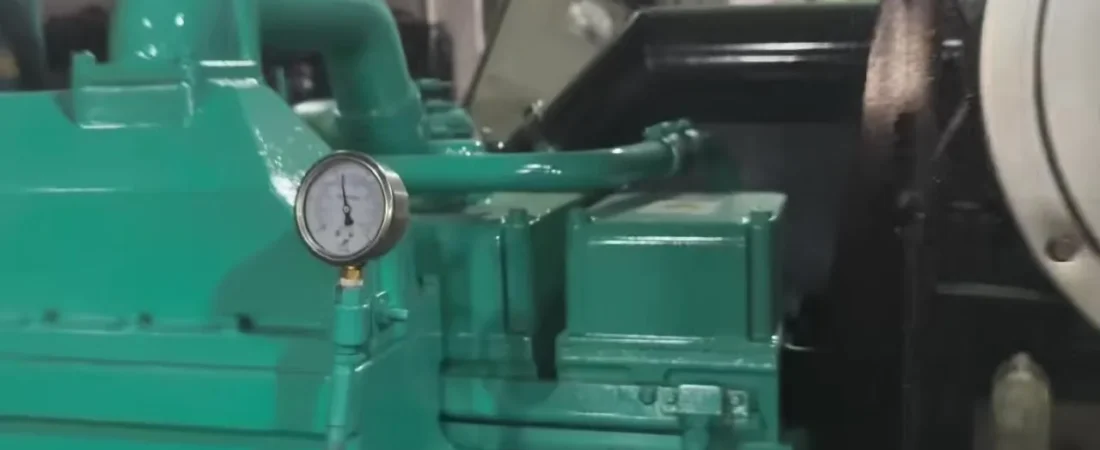
A video cannot on its own confirm instrument accuracy, unseen fault history, future reliability, remaining life or suitability for the buyer’s installation. Nor can a seller’s public promotional test clip be substituted for a unit-specific acceptance file. The HXH media accompanying this article is a load-test poster for a KTA19-G4 example. It illustrates the kind of activity being discussed; it is not evidence that any generator offered to a reader has passed a particular test.
If remote viewing is the only option, agree in advance which plates, connections, displays and timestamps must appear. A third-party inspector can then review the same sequence against the written test sheet. The shipment-proof checklist helps keep this evidence tied to the export transaction.
Turn the test into a contractual deliverable
An RFQ should identify the requested test scope, the person who may witness it, the format of the report, the video and data files to be delivered, and the point at which the buyer may review them. The quotation should say who provides the load equipment, who pays for testing, whether any retest is included and how unresolved faults affect acceptance and shipment. Do not assume a generic “tested” line covers those terms.
Keep the test result alongside service history, refurbishment work and any repairs made between inspection and loading. The maintenance-record guide covers the historical side of the file. A current load test is a dated observation of one configuration under stated conditions; it does not erase an undocumented past.
Before paying a deposit, identify what happens if the available load equipment cannot meet the agreed scope, if the unit records a fault, or if the tested unit changes. These are commercial questions to settle in writing, not technical thresholds to invent in a blog article. For a CIF or FOB deal, keep inspection and acceptance terms distinct from the shipping terms in the Incoterm documents guide.
A compact buyer request to send with the RFQ
Ask the supplier for the exact unit references; rating and tested electrical configuration; test date and location; load source and instruments; time-stamped load steps; readings and event log; ambient and enclosure conditions; named operator or witness; the raw video or data files; and a list of deviations, repairs and retests. Request the relevant engine, alternator and controller documents for interpretation.
Where one item is unavailable, mark it as unavailable and agree whether the gap changes the price, inspection plan or acceptance condition. A clear limitation is more useful than a polished certificate whose relationship to the quoted machine is uncertain. Compare the resulting packet with the unit’s other inspection and refurbishment evidence.
Use HXH’s generator listings to identify a relevant model or stock enquiry, then send the intended duty, power requirement, voltage, frequency, destination and desired test scope through the HXH contact form. Ask for the available records for the exact unit; the existence and quality of those records must be verified unit by unit.
Frequently asked questions
Is a video showing 100 percent load enough?
No. It should be tied to the quoted unit, rating, test setup, duration, measured values and event history. A brief display frame is not a complete report.
Should every used generator be judged by one test duration?
No. The scope should follow the identified equipment, buyer application, contract and qualified technical review. This article does not set a universal duration or acceptance limit.
What if the seller can test only part of the requested load?
Record the actual maximum, duration and reason. Decide separately whether a later witnessed test or a different acceptance condition is needed. A partial run should be described as partial.
Does a successful load test prove the unit will work at my site?
No. It documents observed behavior under the stated test conditions. Site electrical design, ventilation, fuel, ambient conditions and installation still require project-specific review.
Source and image note: manufacturer documentation should be checked through Cummins QuickServe Online and the STAMFORD | AvK owner manuals. Featured HXH media ID 631 is a site-owned load-test poster for one KTA19-G4 example, not a test report or performance claim for any quoted unit.